
BISP Retailer Payment System Down – Today’s Situation
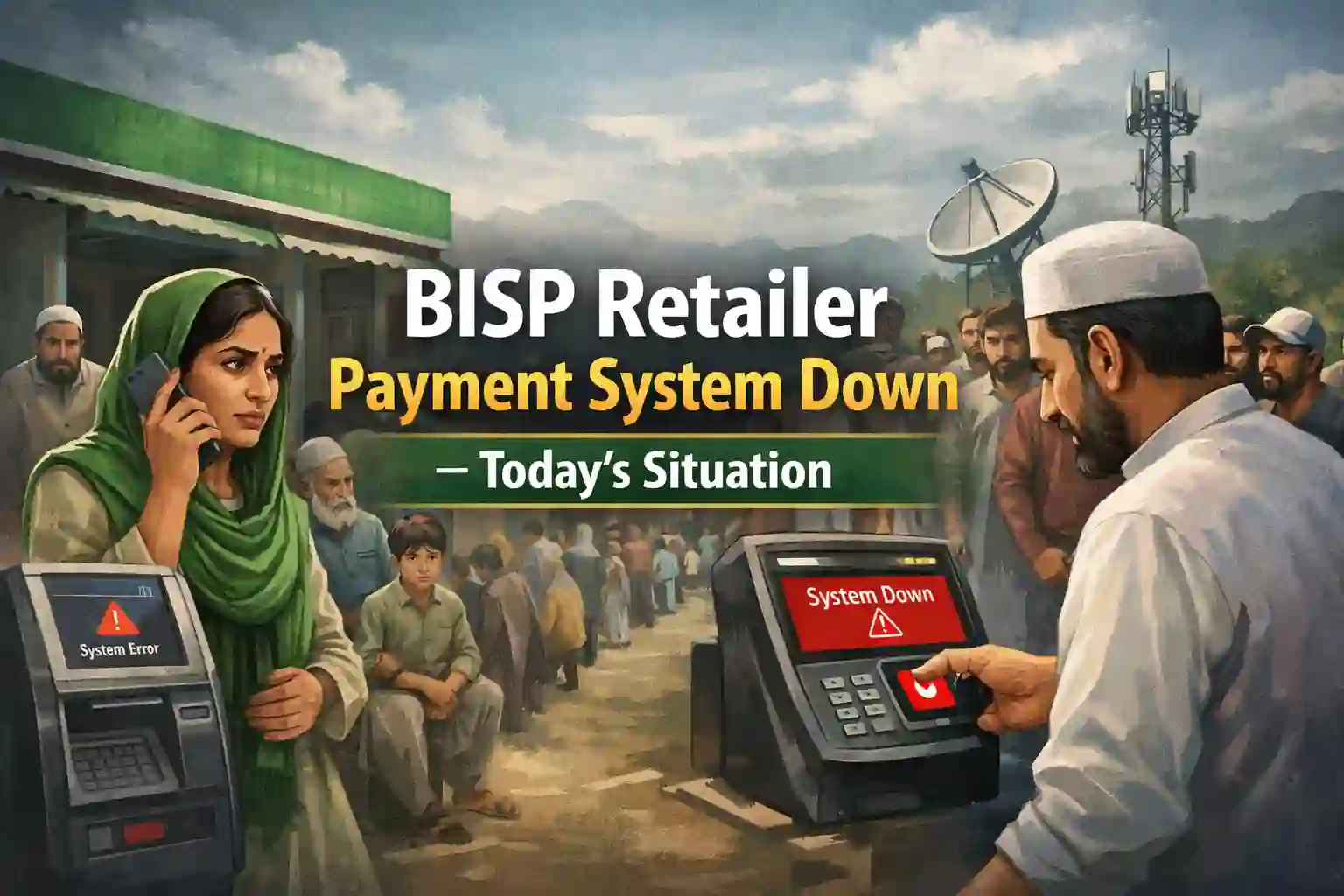
The Benazir Income Support Programme (BISP) payment distribution faced serious disruption today as the retailer payment system went offline in many parts of the country. Thousands of beneficiaries who visited payment centers and retail agents to collect their financial assistance were unable to receive payments due to technical problems.
Since early morning, reports started coming from multiple districts that payment machines were not functioning properly. Retailers informed beneficiaries that system connectivity and verification services were down, making payment processing impossible.
As a result, long queues formed outside BISP payment retailers. Many families waited for hours hoping the system would start again, but in many areas services remained unavailable for most of the day.
The situation created confusion and frustration among beneficiaries who rely on these payments for daily household needs.
Why Did the Payment System Stop Working?
According to retailer operators and local payment agents, the disruption was mainly caused by technical server issues connected to the central payment verification network.
BISP payments require biometric verification through fingerprint scanning. When beneficiaries visit a retailer, their identity is verified through online servers before payment is released. If servers or network connections fail, payments cannot proceed.
Today, retailers reported several issues including:
- Server response delays
- Network connectivity problems
- Biometric verification failures
- Payment machines freezing during transactions
- Transaction processing errors
Because the entire system depends on real-time connection with central servers, once the network slows down or crashes, payment distribution stops immediately.
Retailers confirmed that funds were available, but the payment system itself was unable to process transactions.

Cities and Areas Affected
The payment disruption was not limited to one city. Reports were received from many districts across Pakistan.
Payment interruptions were reported from:
- Lahore
- Faisalabad
- Multan
- Rawalpindi
- Karachi
- Hyderabad
- Peshawar
- Mardan
- Quetta
- Several rural districts
In some areas, the system briefly started working before shutting down again due to unstable connectivity. This caused additional confusion as beneficiaries believed services had fully resumed.
Rural areas faced more problems because network coverage is already weaker compared to cities.

Impact on Beneficiary Families
The disruption caused serious inconvenience for families dependent on BISP payments. Many beneficiaries travel long distances to reach authorized retailers, often spending money on transport.
When payments cannot be processed, families suffer in several ways:
- Transport expenses are wasted
- Daily wage earners lose working hours
- Women and elderly people face physical difficulty waiting in queues
- Household budgets get disturbed
- Essential purchases get delayed
For many families, BISP payments are used for groceries, school expenses, medicines, and utility bills. Even a one-day delay can create financial stress.
Several beneficiaries expressed disappointment after waiting for hours without success.

Retailers Also Faced Problems
Retail payment agents also suffered due to the system outage. Many retailers had large crowds outside their shops and faced pressure from people demanding payments.
Retailers explained repeatedly that the problem was technical and not under their control. Some shop owners had to temporarily close payment counters to manage crowd situations.
Retailers earn commissions based on processed transactions, so outages also reduce their daily income.
Many agents requested authorities to improve server capacity to avoid repeated payment interruptions.

Official Response and Technical Fix Efforts
Although no formal nationwide announcement was immediately issued in the morning, local payment partners informed beneficiaries that technical teams were working to restore services.
Payment service providers reportedly started troubleshooting server connectivity issues to bring systems back online. In some regions, services began partially restoring later in the day.
Such disruptions usually occur when system servers face heavy traffic or technical upgrades are underway.
Authorities are expected to stabilize services quickly so payment operations can continue smoothly.
What Beneficiaries Should Do Now?
Beneficiaries are advised not to panic, as payments are not canceled. The issue is temporary, and payments remain available once services resume.
To avoid inconvenience, beneficiaries should follow these suggestions:
Wait for Confirmation Before Visiting Retailers
Before traveling to payment centers, confirm from local retailers or community members whether services have resumed.
Avoid Standing in Long Queues
If the system is not functioning, avoid waiting unnecessarily in large crowds.
Keep Documents Ready
Ensure CNIC and verification details are available when visiting again.
Visit During Off-Peak Hours
Try visiting payment centers during less crowded times to avoid long waiting periods.
Follow Official Updates
Stay updated through official BISP communication channels or trusted news sources.
Payments will still be available once systems stabilize.
Why Do Such Payment Problems Occur Frequently?
Payment system outages sometimes occur due to several reasons:
Heavy Traffic on Payment Days
When many beneficiaries visit centers on the same day, servers receive excessive load.
Network Connectivity Issues
Weak internet connectivity in remote areas affects real-time verification.
Software Maintenance or Updates
Sometimes payment systems undergo maintenance which temporarily slows services.
Technical Hardware Failures
Retail machines or biometric devices sometimes malfunction.
Power Supply Interruptions
In some areas, electricity outages also disrupt payment services.
Authorities continuously upgrade systems, but occasional disruptions still occur.
How Long Can Payment Delays Continue?
Usually, technical payment problems are resolved within a few hours or a day. However, restoration time depends on the severity of the server or network issue.
In previous situations, services resumed within 24 hours after system repairs.
Beneficiaries who could not receive payments today should be able to collect installments once systems become fully operational.
Payments are not lost due to system outages.
Crowd Management Concerns at Payment Centers
Another major issue observed today was crowd management. Many payment centers lack proper arrangements for managing large crowds.
Women, elderly persons, and disabled beneficiaries often face difficulty waiting for hours.
Experts suggest that better payment scheduling, token systems, and SMS notifications could help reduce crowd pressure.
Digital payment alternatives may also help minimize physical queues in future.
Need for System Improvement
Today’s situation again highlights the need to strengthen payment infrastructure. Beneficiaries depend heavily on BISP support, so payment delivery systems must operate reliably.
Improvements that experts often recommend include:
- Stronger servers and network capacity
- Increased number of payment retailers
- SMS alerts before payment availability
- Digital wallet payment options
- Better crowd management systems
- Rural network improvements
Such upgrades can make payment distribution smoother and reduce inconvenience for families.
Positive Developments Expected Soon
Despite today’s disruption, payment distribution under BISP continues regularly, and improvements are being introduced gradually.
Authorities are working on modernizing payment delivery through banking channels and digital payment systems.
Future payment systems may allow beneficiaries to receive funds through bank accounts or mobile wallets, reducing reliance on retail payment centers.
These improvements aim to make payments faster, safer, and more convenient.
Advice for Beneficiaries Facing Payment Issues
If beneficiaries continue facing payment problems after services resume, they can:
- Visit another authorized retailer nearby
- Contact BISP helpline centers
- Visit local BISP offices for guidance
- Verify payment eligibility status again
Beneficiaries should avoid paying extra charges to agents or middlemen promising faster payments.
Payments are free and directly provided by authorized retailers only.
Conclusion – BISP Retailer Payment System Down Today’s Situation
Today’s BISP retailer payment system outage caused inconvenience for thousands of beneficiaries across the country. Technical disruptions prevented payment processing in many areas, forcing families to return without receiving assistance.
However, the problem appears temporary, and services are expected to resume soon after technical fixes.
Beneficiaries are encouraged to remain calm, stay updated, and visit payment centers once services stabilize. Payments remain available and will be provided once systems return to normal.
Authorities continue efforts to improve payment systems so that deserving families receive financial support without interruption in the future.