OFFICIAL – PAKISTAN BOYCOTTED THE MATCH AGAINST INDIA IN T20 WORLD CUP.
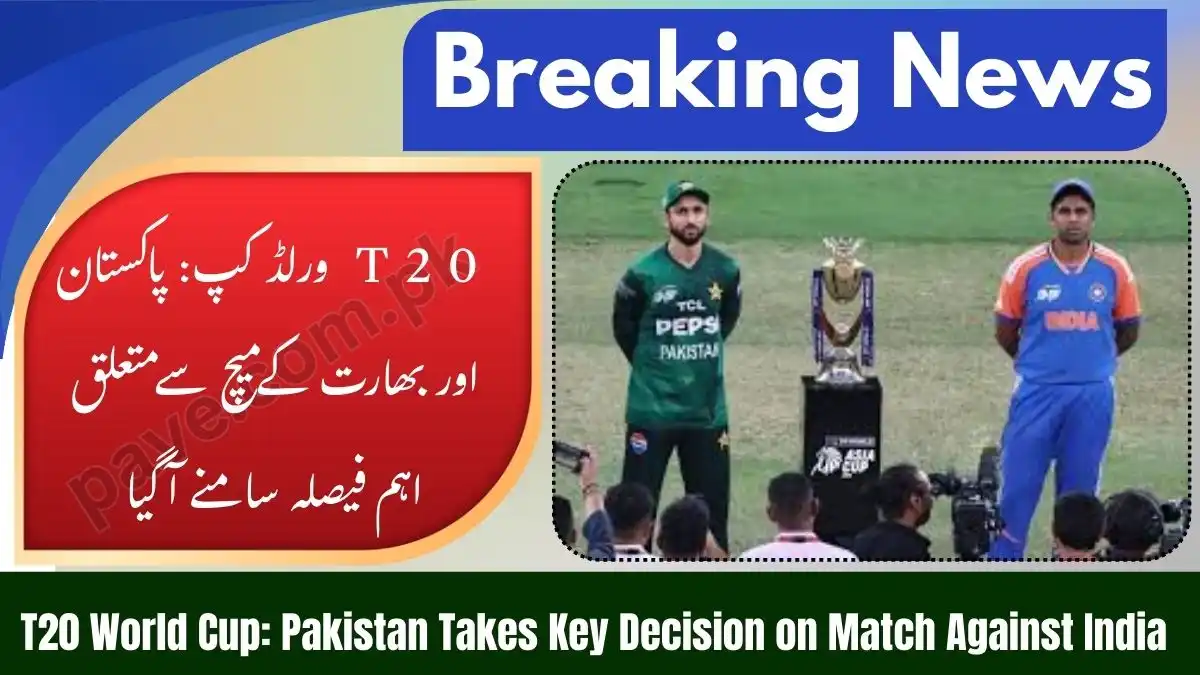
In one of the most dramatic developments in modern cricket history, the Government of Pakistan has officially announced that Pakistan will participate in the 2026 ICC Men’s T20 World Cup, but will boycott its group-stage match against India.
The highly anticipated fixture, scheduled for February 15, 2026, in Colombo, will now not be played by Pakistan, marking an unprecedented partial boycott in an ICC event.
The decision was formally communicated to the Pakistan Cricket Board (PCB) through a government directive on February 1, 2026, just days before the tournament begins on February 7.
The Official Government Directive
According to the notification issued to the PCB, Pakistan’s participation comes with a clear and binding condition:
“The Government of the Islamic Republic of Pakistan grants approval to the Pakistan Cricket Team to participate in the ICC World T20 2026; however, the Pakistan Cricket Team shall not take the field in the match scheduled on 15th February 2026 against India.”
By framing the decision as a state directive, rather than a cricket board initiative, Pakistan has deliberately altered the legal and regulatory dynamics surrounding the boycott.

Why Pakistan Is Boycotting the India Match
The move is rooted in what Pakistani officials describe as institutional bias and double standards within global cricket governance.
The Bangladesh Controversy Explained
The flashpoint involves the recent removal of Bangladesh Cricket Board (BCB) from the tournament.
- Bangladesh raised formal security concerns about playing their matches in India
- The BCB requested a neutral venue, similar to concessions granted in past ICC events
- The International Cricket Council (ICC) rejected the request
- Bangladesh was subsequently replaced by Scotland
This decision triggered strong backlash within Pakistan’s cricketing and political circles.

Allegations of Double Standards
PCB Chairman Mohsin Naqvi publicly accused the ICC of applying unequal security protocols, arguing that:
- Security concerns raised by some boards are accommodated
- Others are penalized or excluded
- Decisions appear influenced by commercial and political pressure
From Pakistan’s perspective, the Bangladesh episode crossed a red line.
The Forfeit Strategy: A Calculated Legal Move
Rather than withdrawing from the tournament entirely, Pakistan has opted for a single-match boycott.
Why This Matters
- The team will play all other matches, primarily hosted in Sri Lanka
- The India match will be forfeited, likely resulting in a walkover
- By citing government instruction, the PCB is attempting to:
- Avoid heavy ICC sanctions
- Reduce the risk of suspension
- Shield itself from accusations of unilateral withdrawal
This is a rare use of what is often called the “government interference clause”, placing the burden of response squarely on the ICC.

Immediate Consequences for the Tournament
1. Commercial Shockwaves
The India–Pakistan match is the most lucrative fixture in global cricket.
- Estimated broadcast and advertising value: $30–40 million
- Broadcasters and sponsors may pursue legal or financial remedies
- The ICC faces pressure from commercial partners unhappy with the loss
This single fixture often subsidizes large portions of tournament revenue.
2. ICC Disciplinary Options
Despite the government framing, the ICC still retains punitive tools, including:
- Withholding Pakistan’s revenue share (estimated around $34.5 million)
- Imposing fines or conditional participation clauses
- Restricting future bilateral or multilateral scheduling
Any harsh punishment, however, risks escalating the conflict further.
3. Competitive Impact on Group A
From a sporting standpoint:
- India will likely be awarded a walkover
- India receives full two points without playing
- Group dynamics shift immediately, placing pressure on other teams
For Pakistan, qualification now depends heavily on remaining matches.
What Happens Next?
Despite the controversy, Pakistan’s logistical plans remain unchanged.
- The national squad is expected to fly to Colombo on February 2, alongside Australia
- Warm-up matches will proceed as scheduled
- Pakistan’s first on-field appearance is now expected to be against Ireland on February 11
Officials stress that Pakistan is not withdrawing from the World Cup, only registering a protest within it.
Why This Decision Is Historic
This is the first time a full ICC member has:
- Entered a World Cup
- Publicly refused to play a specific opponent
- Justified the refusal through a government directive
The move sets a precedent that could reshape how politics, security, and governance intersect in international sport.
Final Analysis
Pakistan’s boycott of the India match is not symbolic. It is strategic, confrontational, and legally complex.
For the ICC, the challenge is existential:
- Enforce discipline and risk political escalation
- Or accommodate the protest and weaken institutional authority
For global cricket, the fallout could redefine how future tournaments are negotiated, hosted, and protected