Punjab Government Starts “Apna Khet, Apna Rozgar” Scheme For 50000 Farmers From February 2026
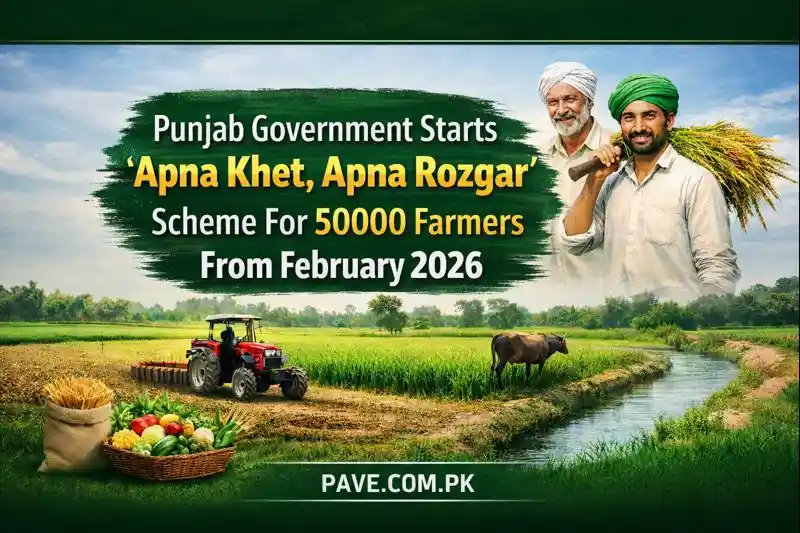
The Punjab Government has officially announced the launch of the “Apna Khet, Apna Rozgar” Scheme, which will start from February 2026. Under this major initiative, agricultural land will be provided to 50,000 farmers across the province. The scheme is aimed at supporting landless farmers, unemployed rural citizens, and young people who want to earn a living through farming.
Agriculture is the backbone of Punjab’s economy, yet many skilled farmers do not own land. This scheme addresses that long-standing issue by offering access to land so farmers can work independently and earn a stable income. Government officials say this initiative will strengthen food security, reduce unemployment, and improve rural livelihoods.
What Is Apna Khet, Apna Rozgar Scheme
Apna Khet, Apna Rozgar is a Punjab Government agriculture and employment program designed to give farming land to those who can cultivate it but lack ownership. Instead of offering short-term financial aid, the government is focusing on long-term income generation.
The scheme will officially begin in February 2026, with phased implementation across different districts. A total of 50,000 farmers are expected to benefit in the first phase.
The program promotes self-employment and encourages people to rely on their skills rather than government assistance.

Main Objectives of the Scheme
The Punjab Government has set clear goals for this initiative.
Providing Land to Landless Farmers
The biggest aim is to help farmers who have experience but no land of their own. Access to land gives them dignity, stability, and growth opportunities.
Creating Rural Employment
By enabling farming activities, the scheme creates employment not only for farmers but also for laborers, suppliers, and transport workers.
Increasing Agricultural Production
More cultivated land means higher crop output, which helps control food prices and reduce shortages.
Strengthening Rural Economy
When farmers earn more, rural markets grow. This improves overall economic activity in villages and small towns.

Who Will Benefit From the Scheme
The scheme is expected to cover a wide range of applicants.
Expected Eligible Beneficiaries
- Landless farmers living in Punjab
- Small farmers with very limited land
- Unemployed rural youth
- Agriculture diploma or degree holders
- Families dependent on farming income
Preference may be given to applicants with farming experience or agriculture-related education.

Number of Farmers Covered
In its first phase, the Punjab Government plans to cover 50,000 farmers. Officials have stated that if the program succeeds, it may be expanded further in coming years.
District-wise targets may be set to ensure fair distribution across Punjab.

Type of Land Provided
The land allocated under Apna Khet, Apna Rozgar Scheme will likely include:
- Government-owned agricultural land
- Unused or underutilized land
- Cultivable land with irrigation access where possible
The land will not be permanently transferred. Instead, it will be provided on a long-term lease or usage basis, allowing farmers to use it productively while ownership remains with the government.
Crops and Farming Activities
Farmers will be encouraged to grow crops suitable for their local climate and soil.
Expected Farming Activities
- Wheat, rice, maize, and sugarcane
- Vegetables and seasonal crops
- Fruits and orchards in suitable areas
- Fodder crops for livestock
Some districts may also allow allied activities such as dairy or poultry farming under specific guidelines.
Support Provided by Punjab Government
The scheme goes beyond land allocation and includes additional support.
Technical Guidance
Agriculture experts and extension officers will guide farmers on:
- Crop planning
- Seed selection
- Fertilizer usage
- Pest and disease control
Training Programs
New or young farmers may receive training in modern farming methods, water management, and productivity improvement.
Financial Linkages
Beneficiaries may be connected with:
- Agricultural loans
- Subsidy programs
- Crop insurance schemes
This support reduces financial risk for farmers.
Application Process
The Punjab Government has indicated that the registration process will be kept simple and transparent.
Expected Registration Steps
- Online or offline application submission
- CNIC verification
- Proof of Punjab residency
- Verification of landless or low-income status
- District-level review
- Final approval and land allocation
Complete details will be shared closer to February 2026.
Role of District Authorities
District administrations will be responsible for implementing the scheme at the local level.
Their duties include:
- Identifying suitable land
- Verifying applicants
- Monitoring land use
- Preventing misuse or illegal transfer
Local oversight is expected to improve transparency.
Economic Impact on Punjab
Experts believe the scheme can bring long-term benefits.
Improved Food Security
More cultivated land means higher production and stable food supply.
Increased Farmer Income
Land access allows farmers to plan long-term and invest in better farming practices.
Reduced Urban Migration
When rural areas offer jobs, people are less likely to move to cities.
Growth in Allied Sectors
Agriculture growth boosts demand for seeds, fertilizers, transport, and storage services.
Possible Challenges
Like any large program, challenges may arise.
Key Concerns
- Fair distribution of land
- Timely verification of applications
- Water availability
- Monitoring land usage
Government Measures
Digital records, field inspections, and regular monitoring are expected to address these issues.
Comparison With Past Agriculture Initiatives
Punjab has previously introduced farmer subsidies, loan schemes, and machinery support programs. However, Apna Khet, Apna Rozgar stands out because it directly addresses land access, which is the biggest barrier for many farmers.
Instead of one-time financial help, this scheme offers sustainable income opportunities.
Why This Scheme Is Important in 2026
With rising food demand, climate pressure, and unemployment, agriculture-based solutions are more important than ever. This scheme aligns with long-term development goals and promotes self-reliance.
It reflects a shift from short-term relief programs to structural reforms in agriculture.
Public Response
Initial feedback from farming communities has been positive. Many see this as a rare opportunity to move from labor work to independent farming.
Experts stress that transparency and fairness will be crucial for public trust.
Conclusion – Punjab Government Starts “Apna Khet, Apna Rozgar” Scheme 2026
The Apna Khet, Apna Rozgar Scheme, starting from February 2026, is a major step by the Punjab Government to support 50,000 farmers through land access and employment. By focusing on self-employment, agricultural growth, and rural stability, the scheme has the potential to transform lives across Punjab.
If implemented properly, it can strengthen the province’s agricultural foundation and create lasting economic impact.
Punjab Government will launch Apna Khet, Apna Rozgar Scheme from February 2026 to provide agricultural land to 50,000 farmers. The initiative aims to boost farming, reduce unemployment, and strengthen rural economy across Punjab.