
Breaking News: ICC Officials Failed to Convince Bangladesh – Bangladesh Refused to Travel India for T20 WorldCup 2026
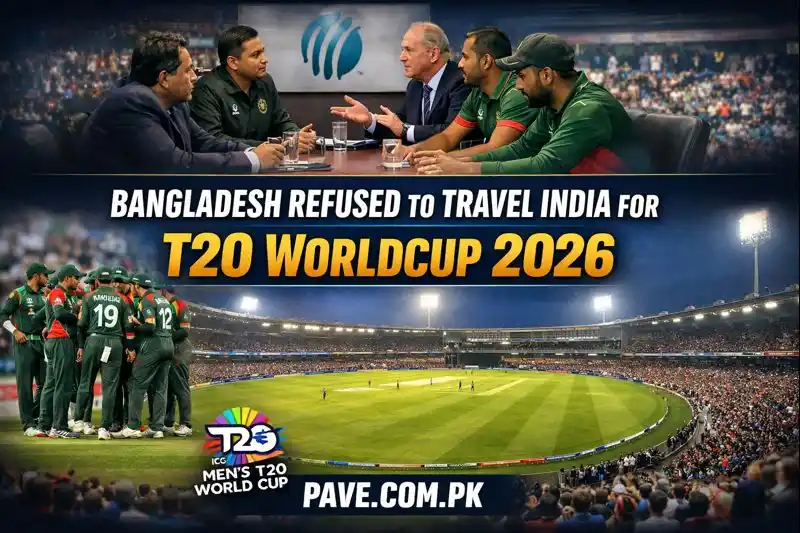
In a major development ahead of the T20 WorldCup 2026, Bangladesh has reportedly refused to travel to India despite multiple efforts by the International Cricket Council (ICC) officials. According to sources, high-level meetings were held, but no final agreement could be reached. This sudden stance by Bangladesh has created uncertainty around the tournament schedule and raised serious questions for the ICC.
The T20 World Cup 2026 is expected to be one of the biggest cricket events of the decade, with India being one of the main host nations. However, this latest situation could force the ICC to rethink its planning, logistics, and even match venues.
What Exactly Happened?
Sources close to the matter claim that senior officials from International Cricket Council held several rounds of discussions with representatives of Bangladesh Cricket Board. The main goal was to address Bangladesh’s concerns regarding travel to India for the ICC Men’s T20 World Cup 2026.

Despite assurances and proposed solutions, Bangladesh reportedly remained firm on its position and declined to confirm participation on Indian soil.
Reasons Behind Bangladesh’s Decision
While no official statement has been released yet, insiders suggest several key reasons behind Bangladesh’s refusal:
1. Security Concerns
One of the biggest concerns raised is player safety and security arrangements. Bangladesh officials are said to be demanding extra guarantees, which they believe were not fully addressed during talks.
2. Political Sensitivities
Cricket often intersects with political realities in South Asia. Ongoing diplomatic sensitivities between regional countries may have influenced the decision, even if indirectly.
3. Scheduling and Travel Issues
Another issue reportedly discussed was the tight schedule and extensive travel within India during the tournament. Bangladesh is believed to be concerned about player fatigue and logistics.
4. Past Experiences
Sources indicate that previous tours and experiences also played a role in shaping Bangladesh’s current stance.
ICC’s Efforts to Resolve the Issue
The ICC, understanding the seriousness of the situation, reportedly took the following steps:
- Conducted multiple meetings with Bangladesh officials
- Proposed neutral-venue options within the hosting framework
- Offered enhanced security coordination
- Discussed flexible scheduling options
Despite these efforts, ICC officials were unable to reach a breakthrough.
Impact on T20 World Cup 2026
If Bangladesh officially confirms its refusal, the impact could be significant:
Tournament Schedule at Risk
Bangladesh is a full-member team, and its absence could disrupt group formations and match planning.
Broadcasting and Commercial Impact
Bangladesh has a massive fan base. Fewer matches involving Bangladesh may affect viewership numbers and broadcasting revenues.
Precedent for Other Teams
This move could encourage other teams to raise similar concerns, putting additional pressure on the ICC.
India’s Position on the Matter
India, one of the central hosts of the T20 World Cup 2026, has not issued any public response so far. However, officials within India are believed to be monitoring the situation closely.
Indian cricket authorities are reportedly confident that all international standards for hosting and security are being met. They also believe that dialogue can still resolve the matter before final schedules are announced.
Bangladesh Cricket Fans React
The news has triggered mixed reactions among Bangladeshi cricket fans:
- Some support the board’s decision, citing player safety
- Others fear Bangladesh may miss out on a major global event
- Many fans are demanding transparency from the cricket board
Social media platforms are already filled with debates, hashtags, and strong opinions from both sides.
What Happens If Bangladesh Does Not Participate?
The ICC has several options if the issue remains unresolved:
- Allocate Bangladesh matches to neutral venues
- Restructure group stages
- Consider reserve teams or format adjustments
- Extend negotiation timelines
However, all these options come with logistical and financial challenges.
Expert Opinions
Former cricketers and analysts believe this situation highlights deeper issues in international cricket governance. Many experts feel that:
- Clear travel and security frameworks should be finalized earlier
- Political neutrality must be protected in sports
- ICC needs stronger conflict-resolution mechanisms
Some analysts are still hopeful that Bangladesh may reconsider closer to the tournament.
Is There Still a Chance of Resolution?
Yes, cricket history shows that such disputes are often resolved at later stages. With more than a year remaining before the T20 World Cup 2026, there is still time for:
- Further negotiations
- Government-level coordination
- Revised hosting plans
ICC officials are expected to continue back-channel talks to avoid a major controversy.
Conclusion – Bangladesh Refused to Travel India for T20 WorldCup 2026
The reported refusal by Bangladesh to travel to India for the T20 World Cup 2026 has created a serious challenge for the ICC. Despite multiple attempts, officials failed to convince Bangladesh, raising questions about tournament planning and international cricket diplomacy.
While nothing is officially final yet, this development serves as a reminder that cricket, especially at the global level, is influenced by more than just the game. All eyes are now on the ICC and Bangladesh Cricket Board to see whether a solution can be found before the world’s biggest T20 event faces disruption.
Bangladesh has reportedly refused to travel to India for the T20 World Cup 2026 despite meetings with ICC officials. The issue may impact tournament scheduling, and further talks are expected in the coming months.