Major Private Schools Face Action for Making Parents Buy Costly Branded Notebooks and Uniforms
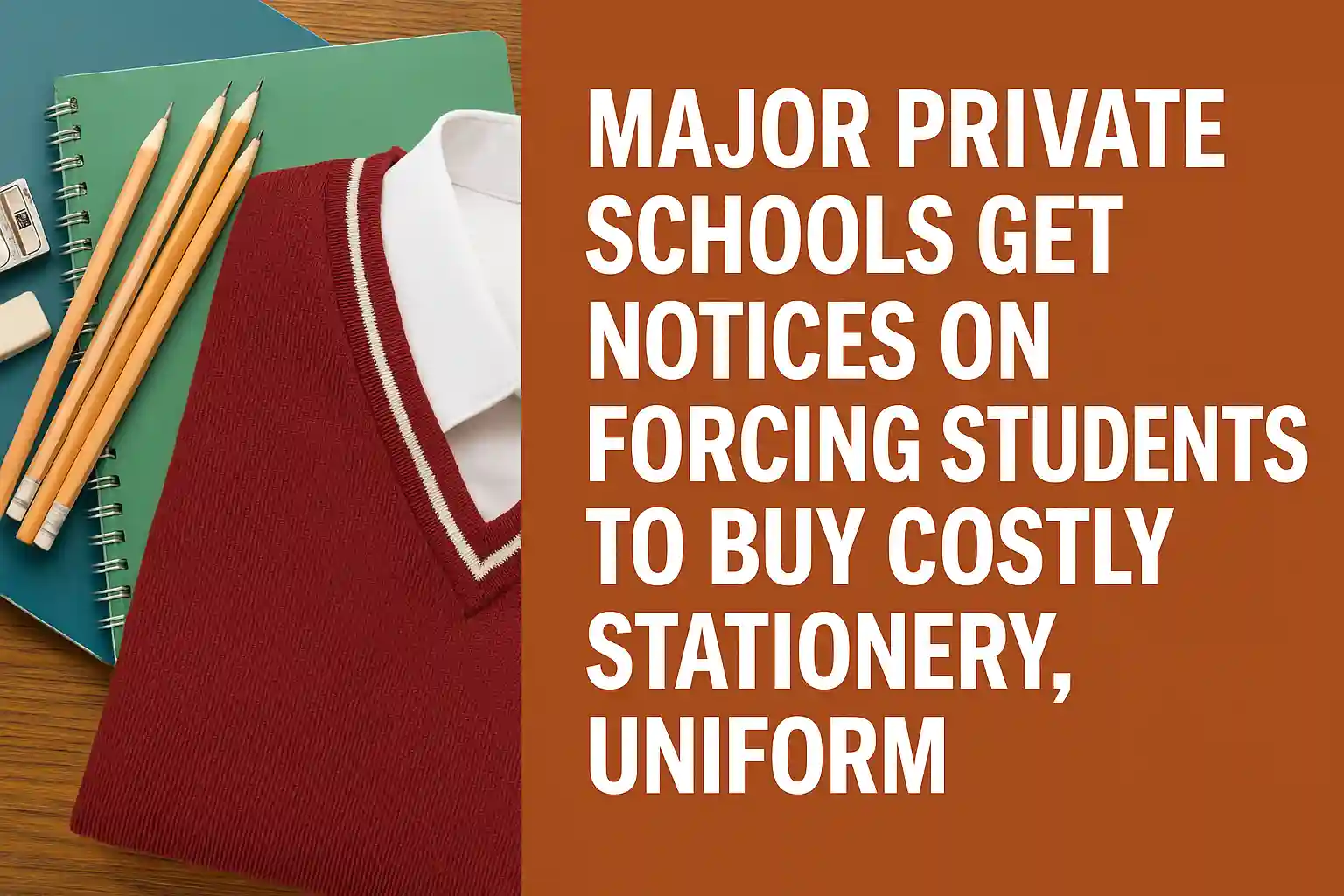
The Competition Commission of Pakistan (CCP) has taken a major step to protect millions of school-going children and their families from unfair pricing practices. The regulator has issued show-cause notices to 17 leading private school systems for allegedly forcing parents to buy overpriced, logo-branded notebooks, uniforms, and study packs from school-authorized vendors only. The move aims to stop what many parents describe as “systematic exploitation” in the name of education.
Over the last several years, complaints skyrocketed as private schools grew increasingly commercialized, charging high fees and pushing mandatory branded materials at inflated rates. According to CCP, these practices may amount to abuse of dominance, cartel-like behavior, and consumer exploitation, all of which violate the Competition Act, 2010.
The issue has triggered intense debate across Pakistan, where nearly half of students study in private institutions. With rising inflation, high school fees, and additional commercial charges—parents say the burden has become unbearable.
In this detailed guide, we explain the CCP action, inquiry findings, laws involved, list of schools, impact on parents, expected penalties, and what happens next.
Read Also: Breaking News: DigiSkills Launches 2nd Batch of Free Online Courses 2025 – Apply Before 2 December
Why CCP Issued Notices to Major Private Schools
The Competition Commission of Pakistan launched a suo motu inquiry after receiving hundreds of complaints from parents, guardians, and consumer associations across the country. These complaints highlighted:
- Compulsory purchase of branded notebooks and workbooks
- High-priced logo-bearing uniforms
- Mandatory study packs sold only through school outlets
- No option for cheaper alternatives
- Lack of pricing transparency
- Exclusive vendors appointed by schools
- Pressure on parents to comply or face consequences
Parents told CCP that schools kept increasing the cost of study packs every year — without disclosure or justification — leaving families with no choice but to comply.

Schools Accused of Abusing Dominant Position
The CCP inquiry identified 17 major private school networks, each operating dozens to hundreds of campuses, and collectively educating millions of students. These include:
- Beaconhouse School System
- The City School
- Lahore Grammar School (LGS)
- Froebel’s
- Roots International
- Roots Millennium
- KIPS
- Allied Schools
- STEP School
- Dar-e-Arqam
- Super Nova
- Westminster International
- United Charter School
- The Smart School
…and others.
Because each enrolled student cannot switch schools easily — due to limited availability, high switching costs, and transportation issues — CCP declared students as “captive consumers.”
This means schools hold a 100% dominant position over their enrolled students and must not impose unfair conditions.
CCP Inquiry: What the Investigation Revealed
The CCP investigation uncovered several violations and anti-competitive practices:
1. Mandatory Branded Study Packs
Many schools forced parents to buy logo-branded notebooks, diaries, and workbooks — often 200–280% more expensive than open-market items.
2. Exclusive Vendor Monopoly
Schools appointed one vendor, blocking thousands of small shops from selling stationery or uniforms.
3. Forced Tying Arrangements
Enrollment was made conditional on purchasing branded supplies, violating:
- Section 4(1)
- Section 4(2)(a)
of the Competition Act, 2010.
4. Online Portals for Expensive Packs
Some schools sold compulsory packs via online portals at fixed high prices, with no option for generic alternatives.
5. Uniforms Only From School-Authorized Shops
Parents reported being forced to buy overpriced uniforms, ties, sweaters, shoes, and badges from designated sellers.
6. High Switching Costs
Families rarely switch schools because it involves:
- Admission fees
- Transport issues
- Academic disruption
- Limited seats
- Expensive transfer costs
This makes parents highly vulnerable to school-imposed conditions.

Why CCP Says Students Are “Captive Consumers”
The Commission defined two markets:
Market 1: Education Services
Each school has a monopoly over its own enrolled students.
Students cannot choose another school mid-year — making them “captive.”
Read Also: Breaking News: DigiSkills Launches 2nd Batch of Free Online Courses 2025 – Apply Before 2 December
Market 2: Ancillary School Products
Such as:
- Notebooks
- Workbooks
- Uniforms
- Bags
- Diaries
- Seasonal uniforms
Schools used their monopoly in Market 1 to force purchases in Market 2.
This practice is illegal under competition law.
Impact on Parents and Small Retailers
The CCP found that these practices have wide-ranging economic implications.
Impact on Parents
- Increased financial burden
- No alternative choices
- Non-transparent prices
- Unnecessary branded materials
- Exploitation during annual admissions
Many parents said they paid thousands of rupees extra due to forced purchases.
Impact on Small Businesses
- Thousands of stationery shops lose business
- Uniform sellers cannot compete
- Market gets monopolized by school-selected vendors
- Prices remain artificially high
What Happens Next: Legal Action and Penalties
The CCP has directed the schools to:
- Submit written explanations within 14 days
- Appear before the Commission
- Justify why penalties should not be imposed
- Stop anti-competitive practices immediately
Possible Penalties Under Law:
- Up to 10% of annual turnover
OR - Rs. 750 million (whichever is higher)
These are among the strongest financial penalties in Pakistani law.
If the schools fail to respond, CCP can conduct ex-parte proceedings and issue penalties directly.
What Parents Can Expect Going Forward
The CCP investigation could lead to:
- End of mandatory branded notebooks
- Freedom to buy from the open market
- Price transparency
- Standard uniforms
- Protection against commercial exploitation
- Accountability for private schools
The decision could reshape Pakistan’s private education sector.
Government Position on the Issue
The CCP emphasized:
- Schools must not misuse their power
- Parents must have choice
- Children cannot be exploited for profit
- Competition must be fair and open
- Small retailers should not be pushed out of business
This case is being viewed as a landmark consumer protection action in Pakistan’s education sector.
Read Also: Breaking News: DigiSkills Launches 2nd Batch of Free Online Courses 2025 – Apply Before 2 December
Conclusion About Major Private Schools Get Notices:
The CCP’s move to issue show-cause notices to major private schools marks a significant pushback against commercial exploitation in education. With millions of families struggling under inflation, the enforcement action aims to restore fairness, transparency, and affordability.
If schools are found guilty, the penalties and corrective orders could completely reshape Pakistan’s private education market — ensuring that essential school supplies remain accessible, affordable, and free from monopolistic control.
Parents across Pakistan now wait for the next CCP hearing, hoping for long overdue reforms
FAQs (Rank Math Optimized)
1. Why did CCP issue notices to private schools?
Because schools forced parents to buy costly branded stationery and uniforms from exclusive vendors, violating competition laws.
2. Which school systems have been named in the CCP inquiry?
Beaconhouse, City School, LGS, Froebel’s, Roots, Allied, KIPS, and several others.
3. What laws did the schools allegedly violate?
Sections 4(1) and 4(2)(a) of the Competition Act, 2010 related to abuse of dominance and tying arrangements.
4. Can CCP impose penalties on the schools?
Yes, up to 10% of annual turnover or Rs. 750 million — whichever is higher.
5. What will change for parents if CCP enforces penalties?
Parents may be allowed to buy notebooks, uniforms, and supplies from any market at affordable prices, ending forced purchases.