Govt Rules Out Guarantees for PIA Buyers – Privatization Push Gains Pace
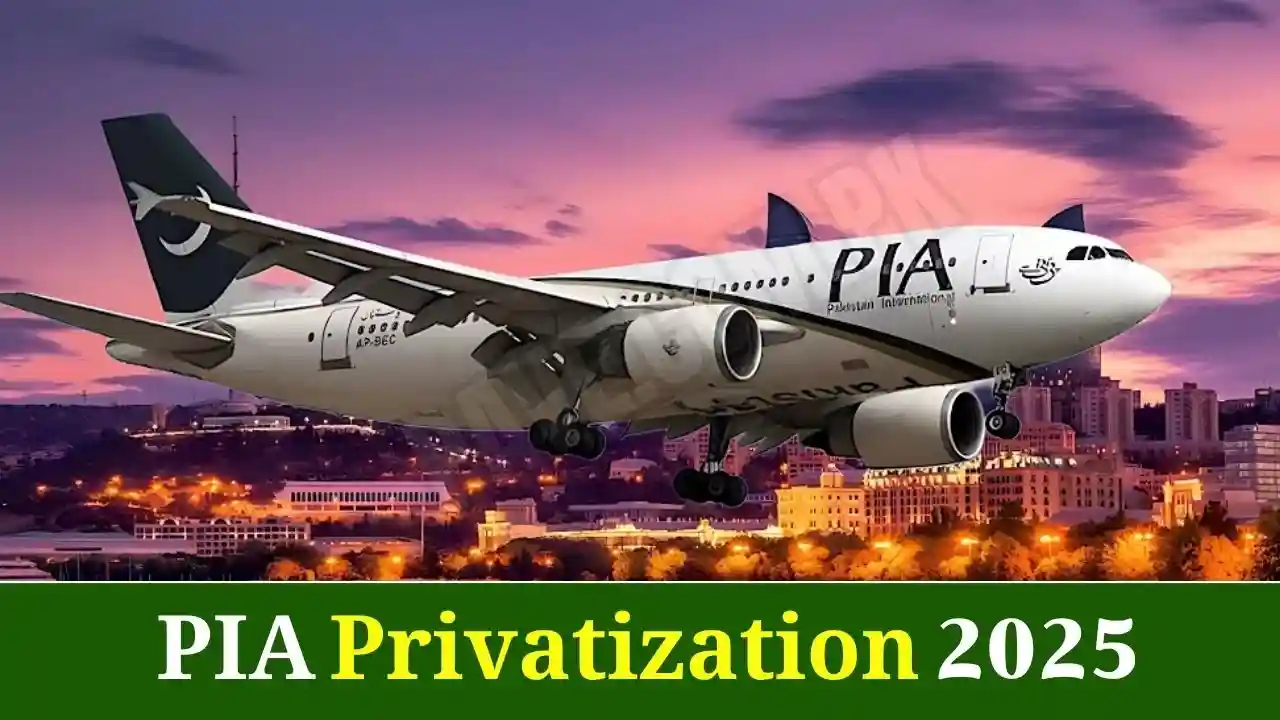
The Government of Pakistan has confirmed that it will not provide any financial guarantees or protection packages to potential investors in Pakistan International Airlines (PIA). The move signals the government’s determination to finalize PIA’s privatization in 2025, aligning with ongoing commitments to the International Monetary Fund (IMF) and the broader reform plan for state-owned enterprises.
Chairman Privatization Commission Muhammad Ali made the announcement during an interview on Aaj TV’s News Insight with Amir Zia. He clarified that while IMF has approved the withdrawal of sales tax on the PIA transaction to attract bidders, the government will not assume responsibility for future liabilities or profits once the sale is completed.

PIA Privatization 2025 – No Guarantees for Buyers
Muhammad Ali said the government intends to complete the sale process within this calendar year. However, he stressed that PIA’s new buyers must operate independently without expecting government support, guarantees, or subsidies.
“Governments change, and running airlines or businesses is not the mandate of provincial administrations,” he noted, adding that past interference in PIA’s operations had made the airline financially unsustainable.
This decision is part of a broader privatization roadmap designed to improve transparency, attract foreign investment, and reduce the financial burden of loss-making public entities.
IMF Clears Sales Tax Waiver on PIA Deal
Ali revealed that the International Monetary Fund had already approved the withdrawal of sales tax for the PIA transaction. The exemption is aimed at making the airline’s sale more attractive to private investors.
He clarified that, aside from the sales tax waiver, the IMF had not suggested or endorsed any special concessions for PIA buyers.
The IMF’s endorsement reflects its growing influence over Pakistan’s privatization strategy. The government hopes that completing PIA’s sale will demonstrate Pakistan’s seriousness about implementing structural reforms and reducing fiscal deficits.
Gradual Approach to Privatization
Ali explained that the government began the privatization process with smaller and less complex entities, such as the First Women Bank, to gain experience before taking on large-scale divestments like PIA.
He said, “Our strategy was to learn from smaller transactions before moving to flagship entities. PIA’s case is far more complex, involving global routes, leases, and liabilities.”
The Privatization Commission now plans to privatize or outsource multiple state-run companies in 2026, focusing on energy, aviation, and utility sectors to maximize efficiency and private-sector participation.
Challenges of Government-to-Government (G2G) Deals
During the interview, Muhammad Ali emphasized that Pakistan’s governance challenges and economic instability have historically weakened its position in government-to-government (G2G) negotiations.
He explained that when the counterpart is an economic superpower, Pakistan struggles to negotiate favorable terms, often losing strategic leverage in long-term agreements.
“G2G deals tend to favor stronger economies. That is why we are prioritizing open, competitive bidding processes that protect Pakistan’s national interests,” he added.
Transparency and Fair Competition
Ali highlighted that transparent auctions ensure better pricing, fair competition, and long-term investor confidence. He said the government’s new privatization framework will rely on open tenders, clear evaluation criteria, and strict compliance audits to prevent corruption and favoritism.
This approach aligns with IMF guidelines that call for fair market-based privatization instead of direct sales or politically influenced deals.
Lessons from the K-Electric Sale
Ali acknowledged past mistakes, pointing specifically to the K-Electric privatization, which suffered from weak due diligence and legal ambiguities.
He said the government has yet to decide whether NEPRA or the federal cabinet has authority to approve K-Electric’s share transfer. This confusion, he added, delayed the process and exposed gaps in Pakistan’s privatization laws.
By learning from such experiences, the Privatization Commission aims to ensure that the PIA sale process is more transparent and technically sound, with all regulatory clearances finalized in advance.
Future Privatization Targets – IESCO, FESCO, GEPCO
The chairman revealed that the next phase of privatization will focus on major electricity distribution companies, including:
| Company | Sector | Planned Year | Status |
|---|---|---|---|
| Islamabad Electric Supply Company (IESCO) | Power Distribution | 2026 | Preparation stage |
| Faisalabad Electric Supply Company (FESCO) | Power Distribution | 2026 | To be offered for private partnership |
| Gujranwala Electric Power Company (GEPCO) | Power Distribution | 2026 | Under review |
Ali said the government is considering the Turkish model, which allows private operators to manage utilities under long-term concession agreements while ensuring public oversight and performance accountability.
Airports to be Outsourced to Private Operators
In addition to PIA’s privatization, the government also plans to outsource airport operations to attract private investment.
Muhammad Ali revealed that Karachi and Lahore airports each need about $1 billion in capital for upgrades and expansion. Instead of allocating public funds, the government wants private operators to finance, modernize, and manage these facilities.
He added that the outsourcing model will follow international standards, ensuring improved passenger services and better security infrastructure.
Structural Reforms in the Gas Sector
Ali stressed that the energy and gas sectors must also undergo deep reforms to reduce circular debt and improve efficiency.
He said, “For the gas sector to move forward, the Sui gas companies will have to be sold. Private investment is the only way to modernize the system and reduce losses.”
The Privatization Commission has already started assessing valuation models and regulatory hurdles for SNGPL and SSGC.
Why the Government Refuses to Offer Guarantees
Analysts say the decision to withhold guarantees is part of Pakistan’s effort to show fiscal discipline and minimize state intervention.
In previous privatization cases, government guarantees led to long-term liabilities, undermining the financial benefits of divestment.
By removing such assurances, the government hopes to attract serious investors with a genuine interest in business performance rather than speculative profit.
Economic Experts React
Economists have welcomed the government’s no-guarantee policy, calling it a necessary step toward market-based reform.
Dr. Shahid Hassan, a Lahore-based economic analyst, said:
“This is a bold move. PIA has drained billions of rupees annually. If privatization is handled transparently, it will save taxpayers’ money and improve service quality.”
He added that foreign investors are likely to participate if they see regulatory stability, IMF support, and professional oversight during the sale process.
Potential Risks and Concerns
However, trade unions and PIA employees have expressed concerns about job security and foreign ownership. They fear that privatization may lead to layoffs, route reductions, and loss of national control.
The Privatization Commission has assured that all employee rights and pensions will be protected during the transition, and PIA branding will remain under Pakistani ownership.
What Happens Next?
The Privatization Commission will soon invite expressions of interest (EOIs) from qualified local and international bidders.
After evaluation, short-listed investors will undergo financial due diligence before submitting final bids. The government expects to complete this process by December 2025, pending legal and parliamentary approvals.
If successful, the PIA sale will become Pakistan’s largest privatization transaction in decades, potentially signaling renewed investor confidence in the country’s economy.
Read Also: Breaking News: Punjab Govt Starts Online Registration for 12,500 STI Teacher Vacancies 2025
Conclusion About PIA Privatization 2025:
The Government of Pakistan’s decision to rule out guarantees for PIA buyers represents a major shift in its privatization strategy — prioritizing transparency, fiscal discipline, and investor responsibility over political or financial concessions.
As the process unfolds, all eyes will be on how the government balances IMF-driven reforms, national interests, and public sentiment surrounding one of the nation’s most iconic institutions.
If executed successfully, the PIA privatization 2025 could become a turning point in Pakistan’s economic reform journey — one that redefines the role of the state in managing public enterprises.
FAQs – PIA Privatization 2025
1. Why is the government privatizing PIA?
PIA has suffered massive financial losses for years. Privatization aims to improve efficiency, attract foreign investment, and reduce the government’s fiscal burden.
2. Will the government offer guarantees to PIA buyers?
No. The government has clearly stated that no guarantees or subsidies will be offered. Buyers must run the airline independently.
3. What is the IMF’s role in PIA’s privatization?
The IMF approved a sales tax waiver to support the sale but did not require Pakistan to give any other investor incentives.
4. Which other companies will be privatized next?
The government plans to privatize IESCO, FESCO, and GEPCO in 2026, followed by reforms in the Sui gas companies.
5. What will happen to PIA employees after privatization?
The Privatization Commission has assured that employee benefits and pensions will be protected during and after the transition.