No Entry for All Vehicles in Islamabad Except Fulfilling This Requirement
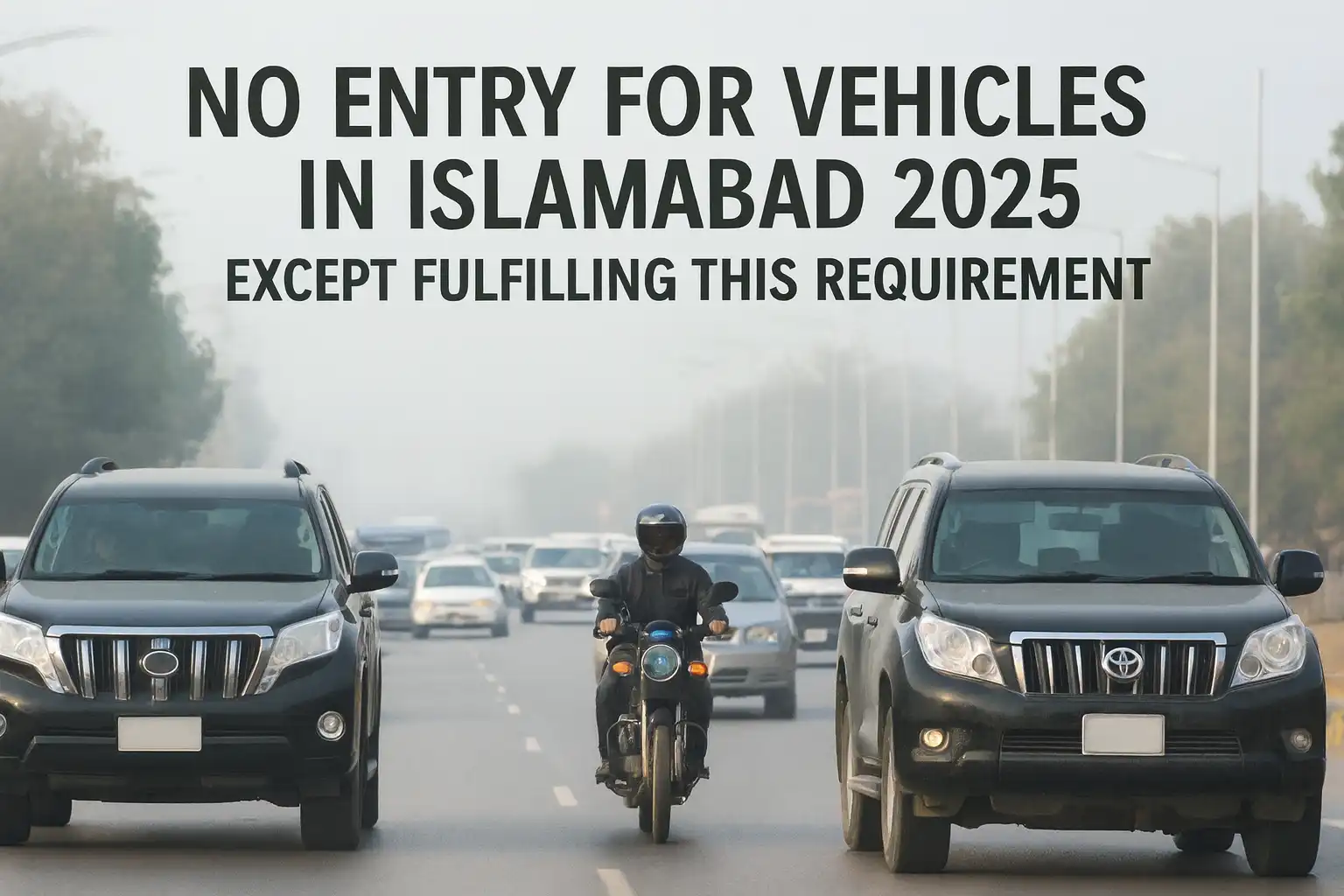
In a major move to control traffic congestion and enhance security, the Islamabad administration has announced strict “No Entry for All Vehicles in Islamabad 2025” unless a specific new requirement is fulfilled. This latest update has created significant attention among daily commuters, ride-hailing drivers, transport companies, and residents who frequently travel in and out of the federal capital. The new regulation aims to maintain smooth mobility across the city, manage increasing vehicle load, and ensure safety during sensitive days and peak traffic hours. Authorities have already issued detailed guidelines, and every vehicle owner must comply with the updated rules to avoid penalties.
According to officials, the city administration has clarified that the No Entry for Vehicles in Islamabad 2025 regulation is not a complete ban but a controlled entry system. This means that vehicles will only be allowed to enter Islamabad after fulfilling the new requirement, which has been made mandatory for all categories of transport. The government believes this step will help reduce unnecessary vehicle inflow, manage traffic at entry points, and improve the overall environment of the city. As Islamabad remains a high-security zone, such updates are often introduced to balance mobility and safety.
This new rule has gained nationwide attention because Islamabad hosts thousands of daily travelers from Rawalpindi and nearby regions. Many citizens rely on Islamabad for jobs, education, healthcare, and business activities. With a rising number of private vehicles, ride-hailing bikes, and intercity vans, the capital was facing growing traffic pressure. Therefore, the updated No Entry for Vehicles in Islamabad 2025 rule is expected to streamline traffic movement while ensuring that only compliant vehicles are allowed entry.
New Requirement Announced Under No Entry for Vehicles in Islamabad 2025
Authorities have confirmed that vehicle entry will now depend on “mandatory digital verification and purpose-based entry clearance.” Every vehicle entering Islamabad needs to be registered in the digital system launched by the traffic administration. This verification must be completed before crossing any city entry point. The system will help track vehicles, verify their purpose of entry, and ensure that only authorized or compliant vehicles enter sensitive zones. The requirement applies to private cars, commercial vehicles, motorcycles, public transport vans, ride-hailing vehicles, and delivery bikes.
Check Also: Punjab Introduces Card-Free Travel on EV Buses with New QR System
Officials have installed digital scanners and verification booths at all major highways entering Islamabad. Those without the required verification will be stopped and instructed to complete the process before being allowed entry. This system is part of the government’s modernization plan, which aims to shift the capital towards smart mobility using digital security tools. The requirement is not optional; it is compulsory for all drivers.

Why the No Entry for Vehicles in Islamabad 2025 Rule Was Introduced
The city administration highlighted several reasons for implementing this rule. Islamabad has seen rapid growth in the number of vehicles entering daily, especially during rush hours. This caused massive congestion on Kashmir Highway, Srinagar Highway, Faizabad Interchange, Rawat GT Road, and Pirwadhai routes. Moreover, the entry of unverified vehicles has raised security concerns, prompting the adoption of strict controls.
Another factor is environmental concerns. With the rise in pollution levels across Pakistan, especially during winter months, Islamabad aims to reduce unnecessary vehicle movement inside the city. Authorities believe controlling entry will directly support the city’s clean and safe environment policies. Additionally, the requirement will help regulate ride-hailing and delivery services, many of which operate with unverified vehicles.

Who Will Be Affected by the New Entry Requirement?
The rule affects all vehicle categories traveling into Islamabad. This includes daily office workers commuting from Rawalpindi, business travelers, students, and intercity transporters. Ride-hailing services such as Bykea, Careem, and inDrive must also register their vehicles under the digital entry system to comply with the new policy. Delivery services operating through Foodpanda, Cheetay, and courier companies need to ensure that their riders meet the entry requirement before entering the city.
Commercial vans, tourist buses, and cargo trucks must also comply. Authorities have stated that even government vehicles must follow the protocol unless they carry special clearance documents. Failing to meet the criteria will lead to immediate denial of entry.

Implementation Points and Monitoring System
The Islamabad Traffic Police confirmed that monitoring teams have been deployed at all main entry points including Faizabad Interchange, Islamabad Expressway, Srinagar Highway, Margalla Road, Rawat, and Motorway M-1 and M-2 exits. These teams will ensure that no vehicle enters the capital without fulfilling the requirement. The digital verification process is quick, taking only a few seconds per vehicle, but the administration suggests completing verification before traveling to avoid delays.
A central control room has also been activated to track verified vehicles using real-time digital data. This will help authorities respond instantly to suspicious vehicle movements, unregistered entries, or violations.

Benefits of the No Entry for Vehicles in Islamabad 2025 Rule
The rule is expected to bring several improvements to the federal capital. Most importantly, it will reduce traffic congestion, especially during peak hours. Daily movement will become more organized as authorities will allow only verified vehicles to proceed. This will also enhance security by preventing unregistered vehicles from entering high-risk areas. In the long run, the rule will support environmental preservation by reducing unnecessary vehicle activity inside the city. Another major benefit is better monitoring of public transport, ride-hailing services, and delivery riders.
Overall, these improvements will create a safer, cleaner, and more digitally managed Islamabad for residents and visitors.
Penalties for Violation
Authorities have warned that violating the No Entry for Vehicles in Islamabad 2025 rule will result in strict penalties. Vehicles attempting to enter without fulfilling the requirement may face fines, temporary impoundment, or forced return. In case of repeated violations, higher penalties and digital blacklisting may apply. Transport companies failing to comply may face license action.
Public Response to the New Rule
Many citizens have expressed mixed reactions. Some believe the rule will reduce unnecessary traffic and improve overall mobility. Others feel concerned about additional checks and delays at entry points. However, officials have assured the public that the digital system will make verification fast and efficient, avoiding long queues.
Ride-hailing drivers have requested the government to make the process simpler, while business owners want a special “frequent visitor pass.” Authorities confirmed that improvements and new features will be added soon.
Check Also: Faisalabad Gets First Mobile Fuel Testing Lab Under Punjab’s Pollution-Free Division Drive
Frequently Asked Questions (FAQs) about No Entry for All Vehicles in Islamabad:
1. What is the new requirement for entering Islamabad?
All vehicles must complete mandatory digital verification and fulfill the new entry requirement before being allowed into Islamabad.
2. Does the No Entry for Vehicles in Islamabad 2025 rule apply to motorcycles?
Yes, it applies to all vehicle categories including motorcycles, cars, vans, and commercial transport.
3. Will ride-hailing vehicles need special entry clearance?
Yes, ride-hailing services must register their vehicles in the system to ensure they meet the entry requirement.
4. Are government vehicles exempt?
Only special-cleared government vehicles may be exempt. Others must fulfill the requirement.
5. Will this system cause delays at entry points?
Authorities say the digital verification process is fast, but early registration is advisable.
6. What happens if a vehicle tries to enter without verification?
It will be denied entry and may face fines or other penalties.
7. Is this rule permanent?
It is part of Islamabad’s long-term digital and security policy, so it may remain for an extended period.
8. When will full enforcement begin?
Officials have stated that enforcement has already started at major entry points across the city.
Conclusion – Islamabad traffic update
The No Entry for Vehicles in Islamabad 2025 rule marks a major shift in how the federal capital manages mobility, security, and environmental safety. By making digital verification mandatory for all vehicles, the administration aims to reduce congestion, improve safety, and enhance the city’s overall transportation system. Whether you are a daily commuter, a student, a ride-hailing driver, or a business traveler, fulfilling the new requirement is now essential before entering Islamabad. As the rule moves into full enforcement, compliance will ensure smooth, safe, and uninterrupted travel into the country’s capital.