
Faisalabad Gets First Mobile Fuel Testing Lab Under Punjab’s Pollution-Free Division Drive
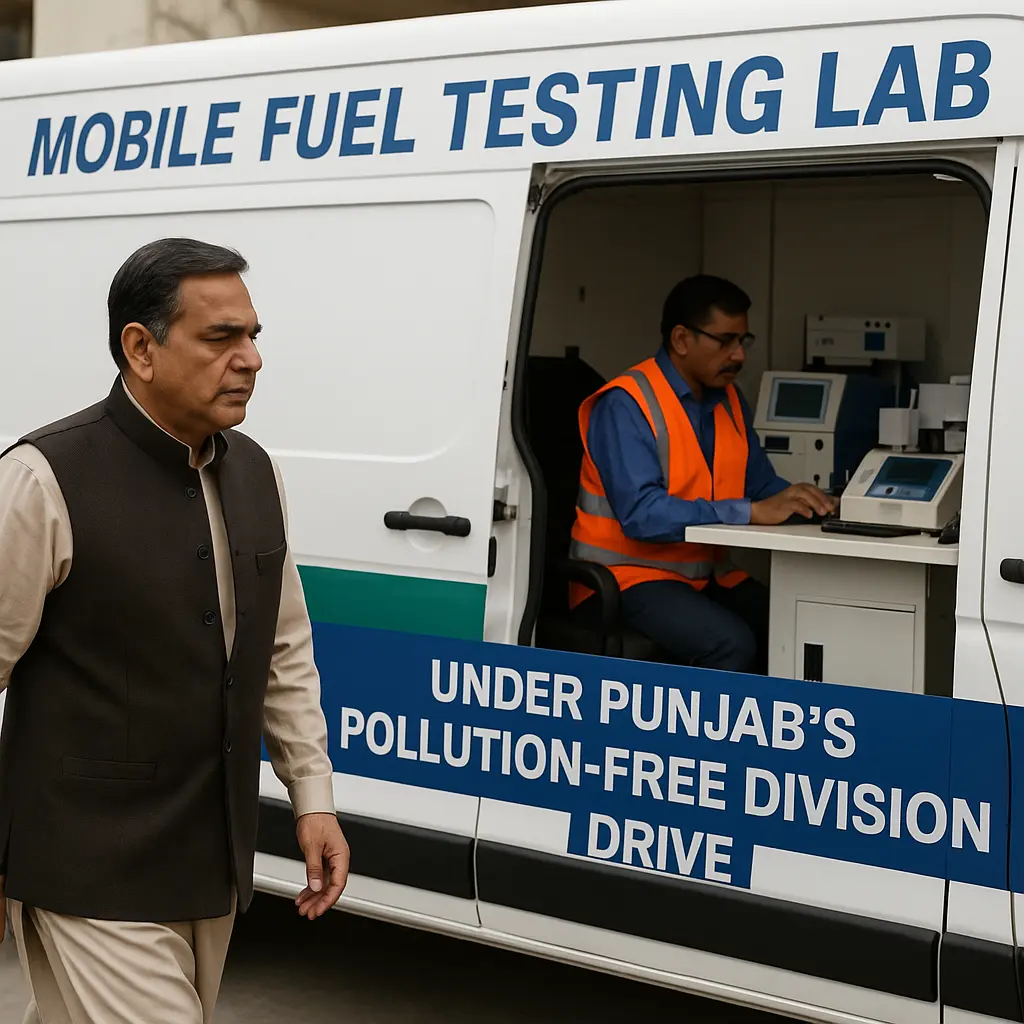
Faisalabad has taken a major step toward clean air and transparent fuel quality as the Punjab government officially launched the city’s first mobile fuel testing lab, marking a new era of real-time monitoring under the Pollution-Free Division initiative. This modern mobile laboratory will now inspect petrol pumps across Faisalabad Division, test fuel quality on the spot, and identify adulteration within minutes — a milestone that will play a critical role in reducing smog, saving engines, and protecting public health.
Commissioner Raja Jahangir Anwar personally visited the newly deployed mobile unit and reviewed its operations. He emphasized that this system will help the administration quickly detect substandard, illegal, or smuggled fuel before it reaches consumers. On the very first day of operations, samples from six petrol pumps were tested, and the results were instantly processed through the lab’s advanced screening equipment.
This mobile lab is part of Punjab’s intensified crackdown on fuel adulteration, vehicle emissions, and air pollution, which are major contributors to smog. With Faisalabad now equipped with a dedicated mobile unit, authorities aim to ensure cleaner fuel, healthier air, and transparent monitoring of more than 1,000 petrol pumps in the region.
A Game-Changer for Fuel Quality Monitoring in Faisalabad
Until recently, Punjab had no dedicated fuel testing laboratory—despite millions of vehicles operating across the province. Limited monitoring capacity, manual sampling, and delays in laboratory results made fuel adulteration a persistent problem.
However, Punjab’s Pollution-Free Division initiative has completely transformed the system by introducing:
- Three modern fuel testing labs (Lahore, Rawalpindi, Multan)
- Three mobile testing units, including the one dedicated to Faisalabad
- Daily sampling and inspection mechanisms
- On-the-spot detection technology
- Integrated vehicle emission testing facilities
Check Also: Punjab Introduces Card-Free Travel on EV Buses with New QR System
Faisalabad’s mobile fuel testing lab is equipped with chemical analyzers, octane evaluation systems, and devices that instantly identify the presence of kerosene, diesel contamination, or low-grade additives. The lab can also determine whether the fuel is locally refined or smuggled from another region—an issue that has significantly impacted Punjab’s fuel market in recent years.
This instant detection system will directly help in sealing pumps selling adulterated fuel, imposing fines, and ensuring consumer protection.

What the Mobile Fuel Lab Does — Step-by-Step Explained
To help the public understand how the mobile unit works, officials explained the complete process:
1. On-Site Arrival
The mobile lab arrives directly at the petrol pump without prior notice. This helps prevent pre-cleaning or manipulation by fuel station owners.
2. Fuel Sample Collection
Officials collect samples from:
- Petrol nozzles
- Diesel dispensers
- Underground storage tanks
These samples are carefully sealed and logged.
3. Instant Chemical Analysis
The lab’s equipment tests:
- Octane number
- Density
- Viscosity
- Presence of kerosene or other contaminants
- Additives and impurities
- Source verification (local vs smuggled fuel)
4. Result Generation
Within minutes, the system generates:
- Pass/Fail result
- Adulteration percentage
- Quality certification sheet
- Comparative analysis
5. Legal Action
If a station fails the test, the administration can:
- Seal the petrol pump
- File a regulatory case
- Impose heavy penalties
- Report the station to OGRA and district authorities
This fast, digital, and transparent procedure will now be implemented across the entire Faisalabad Division.

Why Faisalabad Needed This Mobile Fuel Testing Lab
Faisalabad, one of Pakistan’s largest industrial cities, faces several fuel-related challenges:
- High number of vehicles due to textile industries, transportation, and logistics
- Frequent complaints of adulterated fuel damaging motorcycles and cars
- Smog-related pollution, especially during winter
- Poor fuel quality increasing emissions and engine failure
- Lack of fuel-testing facilities in the region
Commissioner Raja Jahangir Anwar highlighted that vehicle emissions are among the biggest contributors to smog, placing a huge burden on the economy and public health. Adulterated fuel burns improperly, releasing toxic gases that worsen air pollution.
Punjab now aims to combine dust-control measures, emissions testing, and mobile fuel labs to build a cleaner and healthier environment.

Over 1,000 Petrol Pumps to Be Checked Across Faisalabad Division
Faisalabad Division includes:
- Faisalabad
- Jhang
- Toba Tek Singh
- Chiniot
Officials confirmed that more than 1,000 petrol pumps across these districts will be regularly inspected by the mobile unit. This means faster detection, strict accountability, and immediate action against violators.
This initiative is expected to:
- Reduce the sale of poor-quality fuel
- Encourage petrol pump owners to maintain higher standards
- Improve engine life and mileage for consumers
- Minimize environmental pollution
- Ensure fair market competition

Punjab’s Larger Fuel Monitoring System Now in Action
Punjab has established a province-wide fuel quality and emissions monitoring network. This includes:
✔ Three Modern Labs
- Lahore
- Rawalpindi
- Multan
These labs handle large-scale analysis, verification, and sample archiving.
✔ Three Mobile Units
- Lahore
- Rawalpindi
- Faisalabad
These units conduct daily field operations.
✔ 100 Vehicle Emission Analysers
Installed across Punjab for roadside testing.
✔ 22 Fixed Emission Testing Stations in Lahore Alone
These stations have already inspected over 260,000 vehicles this year, according to officials.
Punjab previously had zero such labs, making this transformation one of the most significant environmental reforms in the province’s history.
Impact on Public Health, Smog Reduction, and Fuel Transparency
The launch of Faisalabad’s mobile fuel testing lab will bring multiple long-term benefits:
1. Cleaner Environment
High-quality fuel reduces harmful emissions like:
- Carbon monoxide
- Nitrogen oxides
- Sulphur particles
- Black smoke
This directly reduces smog.
2. Better Engine Performance
Adulterated fuel damages:
- Carburettors
- Fuel injectors
- Catalytic converters
- Pistons
With better fuel quality, engine life and mileage improve significantly.
3. Consumer Protection
Consumers will now get the quality they pay for — no hidden adulteration.
4. Stronger Regulatory Control
Instant detection helps authorities take immediate action without delays.
5. Encouraging Ethical Business Practices
Petrol pump owners will be more careful knowing spontaneous checks are possible at any time.
A Major Win for Faisalabad’s Anti-Smog Strategy
Faisalabad faces severe smog every winter, affecting daily life, industries, transportation, and public health. The government believes that enforcing high fuel standards will reduce smoke-emitting vehicles on roads, ultimately decreasing smog levels in the city.
This mobile lab, combined with roadside smoke testing, dust-control measures, and expanded environmental monitoring, will strengthen Faisalabad’s fight against pollution
Check Also: Hong Kong Expands Short-Term Work Visa Scheme 2025 – 5 New Sectors Added for Foreign Experts
Conclusion – Mobile Fuel Testing Lab
The launch of the first mobile fuel testing lab in Faisalabad is a groundbreaking step under Punjab’s Pollution-Free Division drive. It marks the beginning of a more transparent, fast, and scientific fuel quality monitoring system that will protect consumers, improve air quality, and support long-term environmental reforms. With real-time testing, strict enforcement, and province-wide coordination, Faisalabad is now part of a modern fuel regulation system designed to reduce smog, enhance vehicle performance, and ensure public safety.
Punjab’s commitment to cleaner fuel and cleaner air is now backed by technology — and Faisalabad is leading from the front.