
Pakistan Receives 2nd U.S. Crude Oil Shipment – A Strategic Shift Toward Energy Diversification
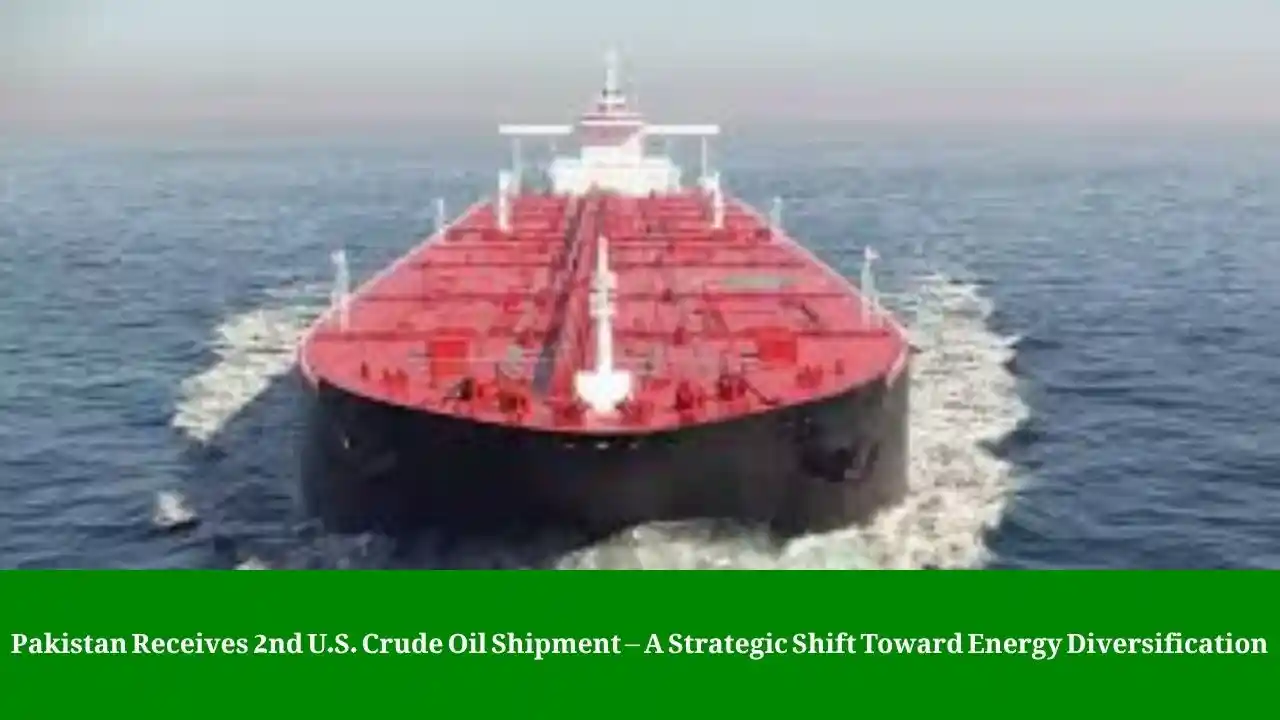
Pakistan has officially received its second shipment of American crude oil, marking another milestone in its ongoing effort to diversify energy imports and reduce dependence on traditional Middle Eastern suppliers. The development also represents a growing chapter in U.S.-Pakistan energy cooperation, highlighting the country’s strategic shift toward securing cheaper and cleaner sources of fuel.
Details of the Shipment
According to port authorities, the vessel MT Albany, carrying one million barrels of West Texas Intermediate (WTI) crude, arrived on November 10, 2025, at Cnergyico’s Single Point Mooring (SPM) terminal located off the coast of Hub, Balochistan.
This consignment follows Pakistan’s first-ever U.S. crude shipment received in October 2025, with a third cargo scheduled for January 2026.
Together, these three deliveries represent an investment exceeding $200 million, a clear sign that Islamabad is expanding its energy horizons beyond the Middle East.

Significance of the Import
For decades, Pakistan’s crude oil imports have primarily originated from Saudi Arabia, the UAE, and Kuwait, which collectively account for over 70% of total supply. However, rising prices and regional supply uncertainties have pushed the government and private refiners to explore alternative sources.
The arrival of U.S. crude marks a strategic milestone, as it brings multiple benefits:
- Diversification of energy sources to reduce dependence on Gulf states.
- Access to high-quality light sweet crude (WTI) suitable for local refineries.
- Lower freight costs through efficient deep-water port infrastructure.
- Long-term trade cooperation between the U.S. and Pakistan.

Cnergyico’s Role – Pakistan’s Deep-Water Energy Gateway
The import operation is being facilitated by Cnergyico Pk Limited, one of Pakistan’s largest downstream energy companies. Its Single Point Mooring (SPM) terminal off the Balochistan coast is currently the only deep-water terminal in the country capable of handling large Aframax and Suezmax tankers.
Unlike the Karachi Port and Port Qasim, which have limited draft depths, the Hub-based SPM allows for direct offloading of crude oil from international supertankers without the need for smaller feeder vessels.
This innovation has dramatically reduced import costs, saving millions in freight and handling expenses annually.
| Infrastructure Feature | Cnergyico SPM Terminal Advantage |
|---|---|
| Depth Capacity | Accommodates large oil tankers |
| Offloading Speed | 8,000–10,000 tons/hour |
| Import Savings | 10–15% lower freight costs |
| Environmental Compliance | Modern spill containment system |
| Operational Role | Key node for U.S.-Pakistan oil trade |

Economic Rationale for U.S. Crude Imports
The decision to import West Texas Intermediate (WTI) crude is based on cost efficiency and refinery compatibility.
1. Lower Refining Cost
WTI is a light, sweet crude oil — meaning it has low sulfur content and high yield of premium products like gasoline, jet fuel, and diesel. Pakistani refiners can process it with minimal desulfurization, lowering refining costs.
2. Pricing Advantage
WTI often trades at a discount to the Dubai/Oman benchmark, which Middle Eastern suppliers use. This discount offsets the higher freight cost of shipping from the U.S. Gulf Coast, making American crude financially attractive even after transport.
3. Cleaner Combustion and Environmental Compliance
WTI produces fewer emissions compared to heavier Middle Eastern grades, helping Pakistan progress toward cleaner energy goals and international climate commitments under the COP28 framework.
Read Also: PAVE Policy Explained: Government’s Roadmap for Green Transportation in Pakistan

How the U.S.-Pakistan Oil Trade Works
The oil trade between the U.S. Gulf Coast and Pakistan’s west coast involves complex logistics but is now economically viable due to Cnergyico’s infrastructure.
Here’s how it works:
- Crude oil is shipped from Texas or Louisiana terminals.
- Tankers travel across the Atlantic Ocean, Mediterranean Sea, and the Suez Canal.
- Ships dock at Hub’s offshore SPM terminal, where the oil is pumped via underwater pipelines directly to onshore storage tanks.
- The crude is then distributed to Cnergyico’s refinery and other local buyers.
This route, though long, is now cost-effective due to modern tanker technology, lower insurance rates, and Pakistan’s new deep-water access.
Strategic Benefits for Pakistan
The U.S. crude deal offers multiple strategic advantages beyond short-term cost savings:
1. Energy Security
Diversifying suppliers reduces the risk of supply disruptions from regional political tensions. Having an American source strengthens Pakistan’s energy independence.
2. Bilateral Trade Enhancement
This marks the first sustained energy partnership between Pakistan and the United States in years. It could pave the way for further U.S. investments in LNG terminals, renewables, and refining capacity.
3. Currency Stabilization
Import diversification helps Pakistan negotiate better terms with suppliers and reduce exposure to oil price shocks, potentially easing pressure on foreign exchange reserves.
4. Competitive Pricing
The WTI import adds competition in the domestic refining market, encouraging local companies to modernize and improve efficiency.
U.S.-Pakistan Trade Partnership Expands
The deal forms part of a broader U.S.-Pakistan trade and energy cooperation framework initiated earlier in 2025. The U.S. has shown growing interest in supporting Pakistan’s energy transition, including renewable and hybrid oil solutions.
“Our partnership with Pakistan in the energy sector aims to foster sustainable growth and economic resilience,” said U.S. Ambassador Donald Blome, welcoming the second shipment.
American companies have also expressed interest in exploration and refining partnerships, particularly in Balochistan’s coastal zones and southern Sindh.
How This Move Impacts Middle Eastern Suppliers
While Pakistan’s trade with Saudi Aramco and ADNOC remains strong, the new imports signal a shift in buying strategy. The country aims to maintain multi-source flexibility rather than depend solely on Gulf producers.
Analysts suggest that Pakistan’s refinery modernization plans, including the upgrade of Cnergyico and PARCO facilities, will allow greater processing of light and ultra-light crudes like WTI — increasing demand for U.S. barrels.
“This doesn’t mean Pakistan is abandoning Middle Eastern suppliers,” said energy analyst Farhan Qureshi. “It’s about having options — and better negotiating power.”
Global Context – U.S. Expands Its Oil Export Market
The United States has become one of the world’s largest crude exporters since lifting its export ban in 2015. With its shale boom, the U.S. now supplies millions of barrels daily to Asia, particularly India, China, South Korea, and now Pakistan.
Pakistan’s imports, while modest in global volume, are strategically symbolic, reflecting its integration into the globalized oil market and the U.S.’s role as a stable supplier.
WTI vs. Middle Eastern Crude – Key Differences
| Parameter | WTI (U.S.) | Dubai/Oman (Middle East) |
|---|---|---|
| API Gravity | 39–41 (lighter) | 31–33 (heavier) |
| Sulfur Content | 0.24% (low) | 2.0% (higher) |
| Refining Cost | Lower | Higher |
| Carbon Emissions | Fewer | More |
| Trade Discount | $3–$6/barrel cheaper | Benchmark price |
| Transport Route | U.S. Gulf via Suez Canal | Shorter regional routes |
These specifications show why WTI is particularly suitable for Pakistan’s refineries, which benefit from high light-distillate yields like petrol and jet fuel.
Potential Challenges Ahead
Despite the success of these shipments, experts note several challenges:
- Currency volatility and import financing amid Pakistan’s tight dollar reserves.
- Shipping time from the U.S. (30–35 days) compared to Middle Eastern routes (5–7 days).
- Global oil market fluctuations, which may reduce WTI’s price advantage.
- Limited refining capacity if imports increase further without refinery upgrades.
Still, policymakers see this as a long-term strategic adjustment rather than a temporary experiment.
Expert Opinions
Industry experts have welcomed the move, calling it a bold and forward-looking step.
“This deal represents Pakistan’s willingness to think globally,” said Dr. Saeed Ahmed, an energy economist. “If managed well, it could reshape our energy import model for the next decade.”
“Cnergyico’s deep-water terminal has unlocked a gateway for transcontinental oil trade. It’s an asset Pakistan must maximize,” added energy consultant Ayesha Malik.
Conclusion About Pakistan receives U.S. crude oil shipment:
Pakistan’s receipt of its second U.S. crude oil shipment underscores a significant strategic and economic shift. By embracing energy diversification, the country is paving the way for greater energy security, reduced costs, and stronger international partnerships.
The arrival of WTI shipments not only reflects evolving trade dynamics but also symbolizes Pakistan’s integration into the global energy market — where efficiency, quality, and independence take center stage.
As the third cargo arrives in January 2026, Pakistan’s partnership with the United States could redefine the country’s energy future for years to come.
Frequently Asked Questions (FAQs)
1. How much crude oil did Pakistan import from the U.S.?
Pakistan imported 1 million barrels of WTI crude in its second shipment via the MT Albany tanker, with a third cargo expected in January 2026.
2. Where was the U.S. oil offloaded in Pakistan?
The oil was offloaded at Cnergyico’s Single Point Mooring (SPM) terminal near Hub, Balochistan, the only deep-water facility capable of handling large oil tankers.
3. Why is Pakistan importing crude from the U.S.?
The imports aim to diversify energy sources, reduce dependence on Middle Eastern suppliers, and capitalize on WTI’s lower cost and cleaner refining properties.
4. What is West Texas Intermediate (WTI) crude oil?
WTI is a light, sweet crude with low sulfur content, making it cheaper to refine into high-value products like petrol and diesel.
5. How do U.S. oil prices compare to Middle Eastern oil?
WTI typically trades at a discount of $3–$6 per barrel to the Dubai/Oman benchmark, offsetting longer shipping distances.