Pakistan’s Cashless Transition Faces Hurdles – Only 700K Retailers Using Digital Platforms
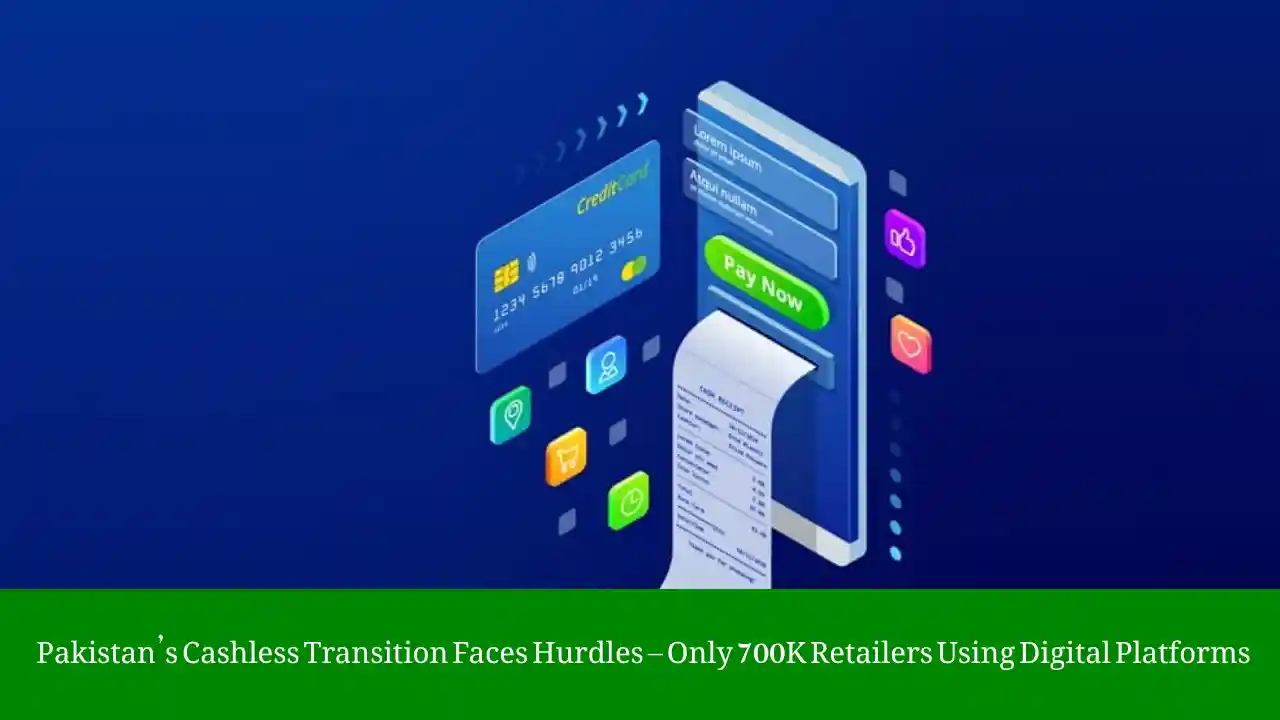
Prime Minister Shehbaz Sharif’s mission to transform Pakistan into a cashless economy is facing a serious challenge: only a fraction of the country’s retailers have adopted digital payment systems.
According to official figures, fewer than 700,000 retailers nationwide currently accept electronic transactions — a surprisingly low number in a country with millions of active shops and traders. The capital, Islamabad, accounts for just 39,000 digitally linked merchants, highlighting the vast gap in digital inclusion.
Government Push for a Cashless Economy
The government has set an ambitious target of connecting 2 million merchants to digital payment platforms by June 2026. This initiative forms part of the broader Digital Pakistan Vision, which aims to enhance transparency, improve tax collection, and reduce currency in circulation.
During a high-level briefing on Monday, Prime Minister Shehbaz Sharif emphasized that digitization of payments is critical for Pakistan’s long-term economic sustainability. He urged the Ministry of Finance, the State Bank of Pakistan (SBP), and the Federal Board of Revenue (FBR) to accelerate implementation.
Retail Sector Resistance Slowing Progress
Retailers — who handle the bulk of daily cash transactions — remain reluctant to join the digital system. Many cite high transaction fees, lack of awareness, limited internet access, and mistrust of banking systems as primary obstacles.
As a result, the adoption rate remains stagnant. The government’s latest data shows:
| Indicator | Value (As of Sept 2025) |
|---|---|
| Total retailers nationwide | Approx. 3.5 million + |
| Retailers linked to digital payments | Less than 700,000 |
| Retailers in Islamabad using digital modes | Around 39,000 |
| Target for June 2026 | 2 million retailers |
Awareness Campaigns in Rural Areas
To overcome resistance, the Prime Minister has directed officials to launch awareness drives in small towns and rural districts. These programs will educate merchants on the benefits of digital transactions, including:
- Safer and faster payments.
- Reduced dependence on cash handling.
- Easier access to credit through transaction histories.
- Integration with tax and accounting systems.
The Minister of State for Finance Bilal Azhar Kayani will oversee the initiative and ensure that digital payment infrastructure expands beyond major urban centers.
Rising Currency in Circulation – A Setback
Despite government efforts, currency in circulation has increased to 34% of GDP as of June 2025, reflecting strong public preference for cash.
Experts say that uncertainty about tax policy and high banking fees are encouraging people to hoard cash instead of moving toward digital platforms. A recent mini-budget that raised the withholding tax on cash withdrawals to 1.5% could unintentionally worsen cash hoarding — exactly the opposite of what policymakers intended.

Traders’ Reluctance and Tax Evasion Concerns
The government’s plan to integrate digital systems is also tied to tax formalization. Traders and retailers make up one of the largest untaxed segments of Pakistan’s economy, but their entry into the tax net has faced decades of resistance.
Instead of immediate taxation, the government is now prioritizing digital monitoring, linking Point-of-Sale (POS) systems with FBR’s database to automatically track sales and revenues.
However, this gradual approach has also delayed meaningful tax reform, leaving a heavier burden on the salaried and industrial sectors.
Tax Contribution Gap Between Retailers and Salaried Class
A key concern highlighted during recent discussions is the imbalance in tax payments between various income groups.
| Category | Income Tax Contribution (FY 2024-25) |
|---|---|
| Retail & Trading Community | Rs. 166 billion |
| Salaried Class | Rs. 606 billion |
| Manufacturing Sector | Rs. 420 billion (approx.) |
| Difference between Salaried & Retail Tax (%) | 265% more paid by salaried workers |
Earlier FBR reports mistakenly estimated retailers’ contribution at Rs. 693 billion, but the FBR Chairman later corrected it to Rs. 166 billion, exposing a significant shortfall in declared income and compliance.
Digital Payment Systems Currently in Use
Pakistan’s digital payment ecosystem includes a range of platforms and services designed to help merchants go cashless:
| Platform Type | Examples | Purpose |
|---|---|---|
| Bank POS Systems | HBL Konnect, MCB Lite, UBL Digital | Retail payments & invoicing |
| Fintech Apps | Easypaisa, JazzCash, Sadapay | QR payments & mobile wallets |
| Government Initiatives | Raast System (SBP) | Instant bank transfers & low fees |
| Payment Gateways | 1LINK, NayaPay | Merchant integration for online sales |
Although usage is rising in urban areas, small traders — particularly in traditional markets — still rely almost entirely on cash.
Role of the State Bank and FBR
The State Bank of Pakistan has been expanding its Raast Payment System, designed for instant, low-cost digital transfers, while the FBR continues linking POS machines to its network for real-time sales monitoring.
However, both institutions acknowledge that technology alone cannot drive adoption — trust and education are equally vital.
Comparing Pakistan with Regional Peers
Pakistan’s digital adoption lags behind its regional neighbors.
| Country | Retail Digital Adoption (2025) | Key Driver |
|---|---|---|
| India | > 12 million merchants using UPI system | Government subsidies & awareness |
| Bangladesh | ~ 1.5 million retailers linked to bKash | Mobile banking integration |
| Pakistan | < 700,000 retailers using digital modes | Resistance & low awareness |
Analysts warn that unless reforms accelerate, Pakistan risks falling even further behind in South Asia’s fast-growing digital economy.
Read Also: Cambridge Exams 2025 Top in World Pakistan – 83 Students Win Global Honors
Economic Implications of Low Digital Adoption
Low merchant participation in digital systems affects Pakistan in several ways:
- Reduced Tax Revenue: Unrecorded cash sales lead to under-reporting.
- High Cash Handling Costs: Banks and businesses spend more on security and transportation.
- Limited Financial Inclusion: Small retailers remain outside formal credit systems.
- Inefficient Monetary Policy: High cash circulation makes inflation control harder.
- Slow E-Commerce Growth: Digital sales channels struggle without merchant integration.
Government’s Next Steps
The government plans several policy interventions to speed up progress:
- Incentives for Retailers: Lower merchant service charges and POS device subsidies.
- Mandatory Digital Integration: For large retail chains and wholesalers.
- Public-Private Partnerships: With banks and fintechs to expand coverage.
- Education Campaigns: Workshops in chambers of commerce and trade associations.
- Data Transparency: Integration of POS data with FBR for real-time tracking.
If implemented properly, these measures could help Pakistan reach its target of 2 million digitally connected retailers by June 2026.
Expert Analysis
According to financial analyst Adeel Ahmed,
“Pakistan’s slow digital adoption isn’t purely technological; it’s cultural. People trust cash because they see it. Changing that mindset will take both incentives and enforcement.”
Economist Dr. Sadia Naeem adds,
“Without expanding digital transactions, Pakistan can’t widen its tax base. Retailers’ inclusion is key to achieving sustainable fiscal growth.”
Conclusion About digital payment systems in Pakistan:
The revelation that less than 700,000 retailers in Pakistan are linked to digital payment systems shows how far the country must go to achieve a cashless economy.
While the government’s vision is clear, success depends on creating trust, education, and technological access for millions of small retailers who still prefer cash.
For Prime Minister Shehbaz Sharif’s administration, turning this ambitious plan into reality will require consistent policy support, strong bank-fintech collaboration, and widespread merchant digital integration — a challenge that defines Pakistan’s financial future.
Read Also: Punjab Launches Two New Mega Public Transport Projects Under CM Maryam Nawaz’s Vision
Frequently Asked Questions (FAQs)
1. How many retailers in Pakistan are using digital payment systems?
Less than 700,000 retailers nationwide currently use digital payment modes as of September 2025.
2. What is the government’s target for digital merchant connections?
The government aims to connect 2 million retailers to digital platforms by June 2026.
3. Why are retailers resisting digital payments?
They cite transaction charges, low awareness, and concerns about tax monitoring as main reasons.
4. Which digital payment systems are available in Pakistan?
Platforms include Easypaisa, JazzCash, Raast, HBL Konnect, and NayaPay for cashless transactions.
5. How will digital payments benefit Pakistan’s economy?
They increase tax collection, reduce corruption, and encourage financial inclusion through formal transactions.