Punjab Announces New Fare Hike for Lahore Metro Bus and Orange Line Train 2025
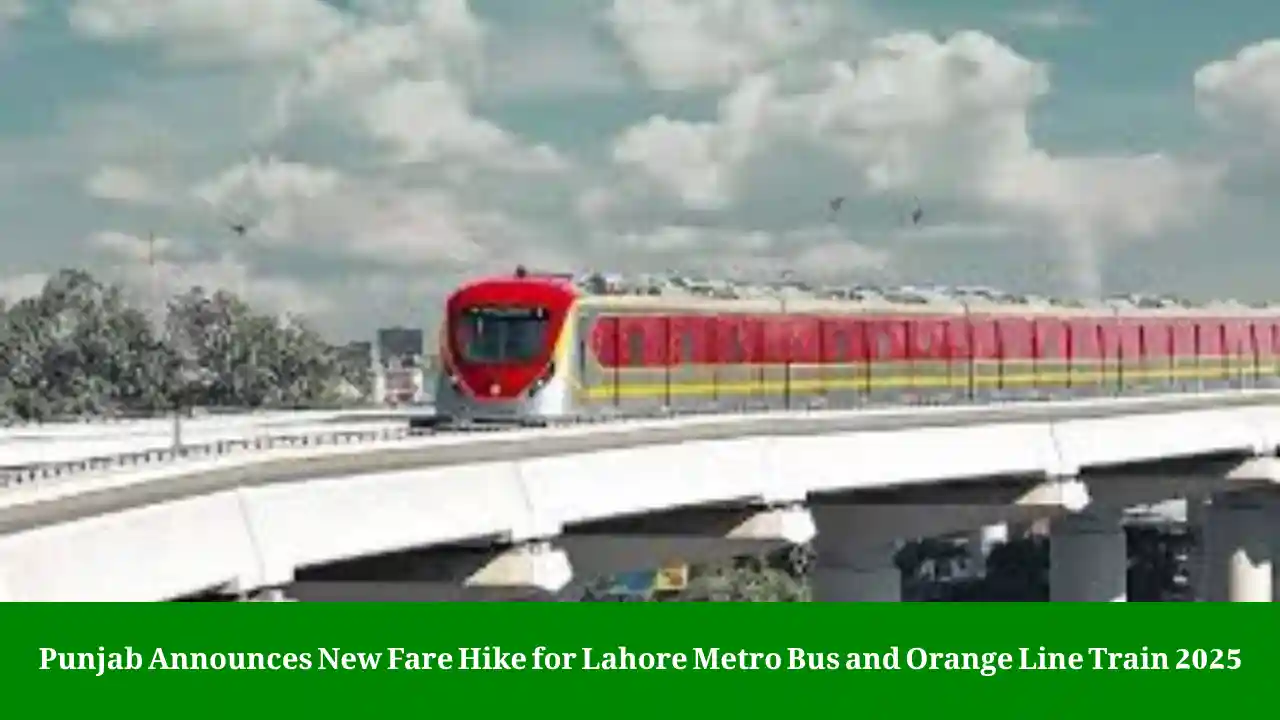
The Punjab Masstransit Authority (PMA) is preparing a proposal to revise fares for Lahore’s major public transport services — including the Orange Line Metro Train, Metro Bus (Green Line), and all feeder and Speedo bus routes.
According to official sources, the proposed changes aim to address rising operational and maintenance costs that have burdened the provincial transport budget over the past few years.
This potential fare adjustment will mark the first major increase in Lahore’s public transit fares in several years, affecting millions of daily commuters.
Background of the Fare Hike Proposal
The Punjab Masstransit Authority, operating under the Transport and Masstransit Department, is responsible for managing Lahore’s urban transit systems, including the Metro Bus and Orange Line Metro Train.
Officials confirmed that a working paper outlining the new fare structure will soon be presented in the next PMA board meeting.
Once reviewed and approved by the authority, the proposal will be forwarded to Chief Minister Punjab Maryam Nawaz Sharif for final approval through the Transport Department.
The proposed plan reflects the increasing financial pressure caused by inflation, energy costs, and maintenance expenses — all of which have made it difficult for the government to maintain existing subsidy levels.
Read Also: Breaking News: Japan Announces Fully Funded ADB Scholarship 2025 for Pakistani Students
Proposed Fare Changes for Lahore Public Transport
Under the proposed revision plan, the fares of all key mass transit services will increase slightly to balance sustainability with affordability.
| Service Name | Current Fare | Proposed Fare (2025) | Increase |
|---|---|---|---|
| Lahore Metro Bus (Green Line) | Rs. 30 | Rs. 40 | + Rs. 10 |
| Orange Line Metro Train | Rs. 45 | Rs. 50 | + Rs. 5 |
| Feeder & Speedo Bus Routes | Rs. 30 | Rs. 35 | + Rs. 5 |
These revised fares, once approved, will take effect after a short public notice period, allowing commuters to adapt.
Officials emphasized that despite the fare hike, Punjab’s mass transit fares will remain among the lowest in South Asia, ensuring that urban transport stays accessible to students, workers, and daily wage earners.
Rising Costs and Financial Burden on the Provincial Budget
The Punjab government currently spends an estimated Rs. 21 billion annually on subsidies for mass transit operations in Lahore, Rawalpindi-Islamabad, and Multan.
While fare collection contributes around 24% of operational and maintenance expenses, the government covers more than 75% of total costs.
In past years, fare revenue made up approximately 32% of total costs, but this share has declined due to increasing energy prices, spare part imports, and maintenance overheads.
With Pakistan’s persistent inflation and currency depreciation, the cost of running public transport systems — particularly electric trains and buses — has significantly increased.
Government sources revealed that the Orange Line Metro Train alone consumes around 80 MW of electricity daily, making it highly sensitive to changes in energy tariffs.

How the Proposed Fare Hike Will Impact Daily Commuters
For the average commuter, this fare increase means an additional Rs. 10 per trip on the Metro Bus and Rs. 5 on the Orange Line.
While modest, this increase could add up for regular passengers, especially students and low-income workers who rely on public transport for daily travel.
To address concerns, the Punjab government may consider introducing discounted smart travel cards or monthly passes for frequent riders. Officials are also exploring digital fare collection systems that could offer cashback or loyalty programs to offset rising costs.
Government’s Justification for the Fare Increase
Officials at the Punjab Transport Department have defended the proposal, stating that the increase is essential for maintaining service quality and reliability.
They argue that without fare adjustments, the provincial government would face unsustainable fiscal pressure, leading to reduced service frequency and potential project delays.
A senior PMA official noted:
“The cost of maintaining hybrid buses, electric trains, and feeder systems has increased drastically. We are doing our best to balance financial sustainability with affordability.”
The government maintains that fare adjustments will not eliminate subsidies but will reduce dependency on public funding while encouraging long-term investment in clean, efficient transport.
Public Reaction and Political Sensitivity
Public response to the potential fare hike has been mixed.
Commuters expressed concerns about the rising cost of living, with some arguing that higher transport fares would further strain household budgets.
However, many others acknowledged that small fare increases are reasonable if they help ensure better service, punctuality, and maintenance.
Read Also: Breaking News: Government Announces Local Holiday in Sindh District
Opposition parties and civic organizations have urged the government to protect low-income commuters by introducing student passes and targeted subsidies rather than blanket fare increases.
Comparison with Other Regional Cities
Compared to regional standards, Lahore’s transport fares remain significantly lower.
| City | Metro/Bus Average Fare (Equivalent in PKR) |
|---|---|
| Lahore (Proposed 2025) | Rs. 35–50 |
| Delhi (India) | Rs. 60–90 |
| Dhaka (Bangladesh) | Rs. 45–75 |
| Karachi (Green Line BRT) | Rs. 55 |
| Istanbul (Turkey) | Rs. 120–200 |
Even with the new fares, Lahore’s Metro and Orange Line systems remain heavily subsidized, demonstrating the Punjab government’s ongoing commitment to accessible transportation.
Future of Lahore’s Mass Transit – Towards Smart, Green Mobility
Beyond fare revisions, the Punjab government aims to make Lahore’s transport eco-friendly and digitally integrated.
Several initiatives are already underway, including:
- Smart Card & QR Payment Integration for buses and trains
- Electric bus depots in Multan, Lahore, and Rawalpindi
- New electric feeder buses under the Punjab Green Mobility Program
- Air-conditioned bus shelters with solar-powered lighting
- Mobile app ticketing systems for real-time route tracking
According to the PMA, these projects are part of the “Smart Mobility 2030” Vision, focusing on sustainable public transport infrastructure across Punjab’s major cities.
Challenges in Implementing the New Fare Policy
Despite the necessity of the fare revision, several administrative and political challenges may slow implementation:
- Public Backlash: Resistance from commuters, especially students and workers, may pressure the government to defer or revise the increase.
- Inflation Sensitivity: The proposal coincides with high inflation, making even minor hikes politically sensitive.
- Operational Efficiency: Ensuring that higher fares translate into improved services remains a key public demand.
- Technological Transition: Integrating digital payment systems across all routes will require new infrastructure and training.
Officials assure that these challenges are being addressed through gradual implementation, public consultation, and transparent communication.
Expert Opinions on Sustainable Fare Models
Urban transport experts believe that gradual fare revisions are vital to prevent service degradation.
According to transport economist Dr. Adeel Qureshi,
“A sustainable mass transit system must recover at least 40% of operational costs from passengers while ensuring subsidies are targeted toward vulnerable groups.”
He further suggested the introduction of distance-based fares, allowing short-distance commuters to pay less, while long-distance passengers pay proportionally higher rates.
Such flexible fare structures could make public transport more equitable.
Link with Broader Development Projects
The fare proposal is part of a broader urban reform plan under Chief Minister Maryam Nawaz Sharif’s Vision 2025, which includes:
- Expansion of the Green Metro Bus Network to new routes
- Modernization of ticketing and tracking systems
- Integration of Orange Line with feeder bus networks
- Introduction of women-only compartments for safety and convenience
These reforms are expected to enhance connectivity, reduce travel time, and promote Lahore as a modern, commuter-friendly metropolis.
Public Transport and Economic Impact
Public transport plays a major role in Lahore’s economy, serving over 300,000 passengers daily on the Metro Bus and 200,000 commuters on the Orange Line.
Efficient, affordable mass transit reduces road congestion, pollution, and fuel imports — key to sustainable urban growth.
However, officials warn that continuing without fare adjustments could lead to reduced maintenance quality and increased breakdowns, undermining years of investment.
Read Also: Breaking News: Punjab Govt Announces Final Decision on Increasing Electric Bus Ticket Price
Conclusion – Balancing Affordability and Sustainability
The proposed fare revisions for Lahore’s Metro Bus, Orange Line, and feeder routes reflect the Punjab government’s attempt to strike a balance between fiscal responsibility and public affordability.
While commuters may feel short-term strain, these adjustments are crucial for maintaining long-term service quality and expanding urban mobility.
If managed transparently, the plan could strengthen Lahore’s reputation as Pakistan’s most advanced public transport city.
Trending FAQs About Lahore Metro Bus and Orange Line Fare Hike
1. What are the new proposed fares for Lahore’s Metro Bus and Orange Line Train?
The Metro Bus fare may increase from Rs. 30 to Rs. 40, and the Orange Line fare from Rs. 45 to Rs. 50.
2. Why is the Punjab government increasing transport fares?
The rise is due to higher maintenance, electricity, and operational costs, while fare revenue covers less than 25% of total expenses.
3. When will the new fares take effect?
Once the Punjab Masstransit Authority approves and the Chief Minister signs the summary, implementation is expected in early 2026.
4. Will subsidies for Lahore’s transport end after the fare increase?
No. The government will continue providing subsidies but aims to reduce dependency on them for sustainability.
5. Will students and low-income commuters get discounts?
Officials are considering monthly smart cards and discounted passes for regular commuters, students, and senior citizens.