
Pakistan Issues Over 2,400 Visas to Sikh Pilgrims from India for Guru Nanak Birth Anniversary 2025
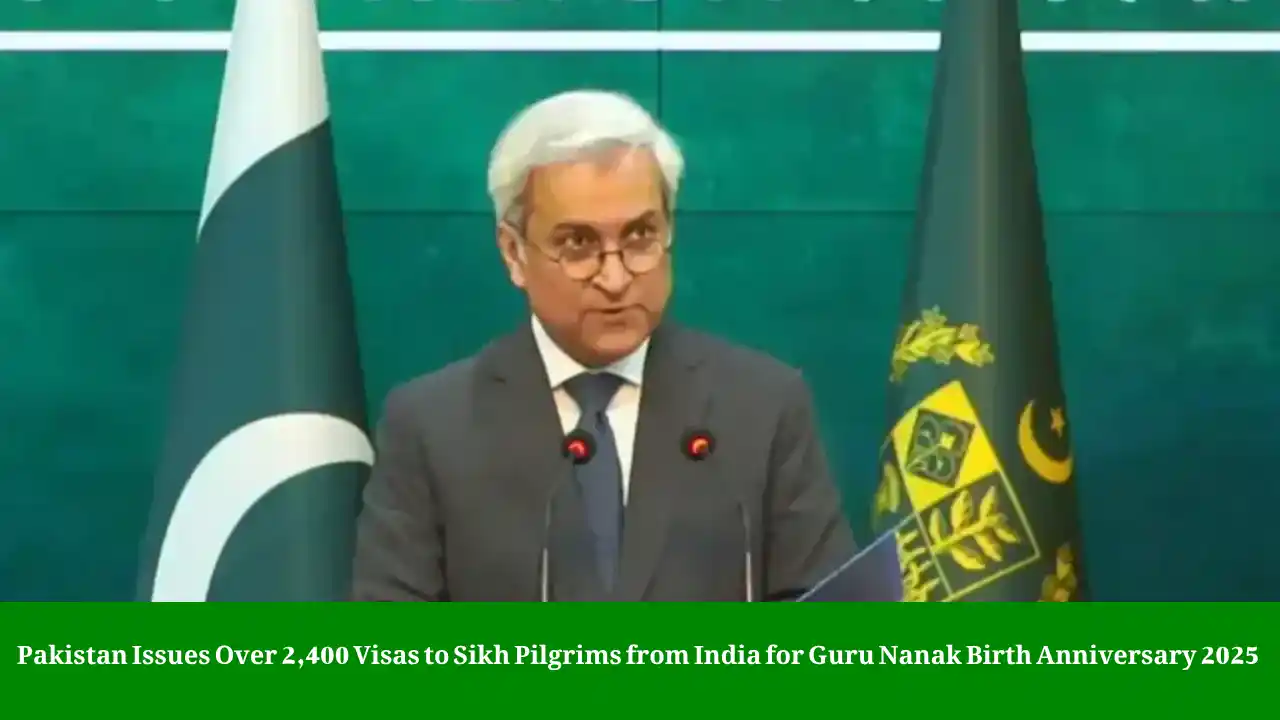
Pakistan’s Foreign Office (FO) has categorically rejected misleading claims circulating in Indian media that Hindu community members were denied entry into Pakistan. The FO clarified that the High Commission for Pakistan in New Delhi issued more than 2,400 visas to Sikh pilgrims from India to attend the birth anniversary celebrations of Baba Guru Nanak Dev Ji from November 4 to 13, 2025.
The FO emphasized that Pakistan remains fully committed to facilitating religious tourism and ensuring smooth arrangements for pilgrims of all faiths.
Pakistan Rejects Indian Allegations About Denying Entry to Hindu Pilgrims
In a strongly worded statement, Foreign Office Spokesperson Tahir Hussain Andrabi dismissed as “baseless and politically motivated” the allegations that Hindu devotees were refused entry into Pakistan.
He stated:
“These claims are entirely unfounded and represent yet another attempt to distort facts and politicize a matter that was purely administrative in nature.”
The spokesperson explained that Pakistan has a long-standing policy of welcoming pilgrims of all religions, including Hindus, Sikhs, and Buddhists, to visit their sacred sites in the country.

Over 2,400 Sikh Pilgrims Granted Visas by Pakistan
According to the Foreign Office, the High Commission of Pakistan in New Delhi issued 2,400 visas to Sikh pilgrims from India for the annual Guru Nanak Jayanti 2025 celebrations.
Out of these, 1,932 pilgrims successfully crossed into Pakistan via the Attari-Wagah border on November 4, marking the beginning of their spiritual journey to Nankana Sahib and other holy gurdwaras.
However, the FO pointed out that approximately 300 visa holders were prevented by Indian authorities from crossing over, and this issue was entirely on the Indian side of the border.
Read Also: Inside Pakistan’s EV Revolution: How PAVE Is Driving Electric Mobility Nationwide

Smooth and Orderly Immigration Process at Wagah Border
The statement from the FO clarified that the immigration process on the Pakistani side was smooth, transparent, and free of any obstruction.
Pakistani authorities efficiently managed the large number of visitors through coordinated efforts by immigration, security, and religious affairs departments.
Only a small number of individuals with incomplete documents or discrepancies in their travel papers were advised to return to India under standard immigration procedures.
The FO stressed that this action was administrative, not discriminatory, and was consistent with Pakistan’s sovereign right to regulate entry into its territory.

Pakistan’s Commitment to Religious Tourism and Harmony
Pakistan has repeatedly affirmed its dedication to promoting religious tourism and interfaith harmony by opening its sacred sites to visitors from around the world.
The Kartarpur Corridor, inaugurated in November 2019, stands as a symbol of Pakistan’s efforts to provide direct and visa-free access for Sikh pilgrims to Gurdwara Darbar Sahib.
Over the years, thousands of Sikh pilgrims have visited Pakistan to mark important events such as Vaisakhi, Guru Nanak Jayanti, and Martyrdom Day of Guru Arjan Dev Ji.
Pakistan’s policy framework allows for regular exchange of pilgrimages between the two countries under the Pakistan-India Protocol on Visits to Religious Shrines (1974).

Clarification on Administrative Procedures
The Foreign Office reiterated that no person was denied entry on religious grounds.
The individuals who could not enter lacked complete documentation, which is a standard immigration requirement across all international borders.
According to the FO:
“To suggest that these individuals were denied entry on religious grounds is completely incorrect and mischievous. The action taken was purely administrative, consistent with Pakistan’s sovereign right to regulate entry into its territory.”
Read Also: Breaking News: Government Announces Local Holiday in Sindh District
Indian Media Accused of Politicizing the Issue
The Foreign Office criticized sections of Indian media for spreading false narratives and attempting to give the issue a communal or political color.
The statement said such behavior reflected the prejudiced mindset dominating Indian government and media circles, where religion is often used for political gain.
“Any attempt to give this issue a communal or political color is not only regrettable but also reflective of the prejudiced mindset that increasingly dominates the Indian government and media narratives,” the FO added.
Sikh Pilgrims’ Journey to Holy Sites in Pakistan
The visiting Sikh pilgrims will spend several days visiting major gurdwaras across Pakistan, including:
- Gurdwara Janamasthan Nankana Sahib (birthplace of Guru Nanak Dev Ji)
- Gurdwara Panja Sahib, Hasan Abdal
- Gurdwara Dera Sahib, Lahore
- Gurdwara Kartarpur Sahib
These sites hold deep spiritual importance for Sikhs worldwide, and their maintenance and facilitation remain a priority for Pakistan’s Evacuee Trust Property Board (ETPB) and other concerned authorities.
Special security, accommodation, transportation, and medical facilities have been arranged for pilgrims.
Pakistan’s Broader Policy Toward Religious Minorities
Pakistan’s Constitution guarantees freedom of religion and protection for the rights of minorities.
The government has taken several initiatives in recent years to promote interfaith harmony, including:
- Renovation of Hindu temples and Sikh gurdwaras.
- Restoration of Buddhist heritage sites in Taxila and Swat.
- Legal reforms to safeguard minority rights and heritage properties.
The FO reiterated that Pakistan’s religious tourism policy is built on inclusivity, cultural preservation, and respect for all faiths.
Background: India-Pakistan Pilgrimage Relations
Religious tourism between India and Pakistan continues under the 1974 Protocol on Visits to Religious Shrines, which facilitates the movement of pilgrims to 15 shrines in Pakistan and 5 in India.
Despite political tensions, these visits have continued annually, reflecting both countries’ acknowledgment of their shared cultural and religious history.
In recent years, Pakistan has been more proactive in issuing visas and maintaining sites compared to India’s relatively restrictive policies.
International Reactions and Diplomatic Perspective
Analysts have noted that Pakistan’s transparent handling of the Sikh pilgrimage visas and immigration procedures strengthens its image as a responsible regional player.
Observers say this step is part of Islamabad’s broader effort to showcase religious tolerance and tourism potential under its new “Faith Diplomacy” strategy — positioning Pakistan as a bridge between faith communities in South Asia.
Experts Applaud Pakistan’s Facilitation Efforts
Religious scholars and international observers have lauded Pakistan’s consistent efforts in maintaining peace and harmony among different religious groups.
Experts point out that initiatives like Air Punjab, Green Tractor Scheme, and Tourism & Heritage Authority reflect the government’s commitment to development and cultural preservation.
The facilitation of 2,400 Sikh visas amid regional tensions demonstrates Pakistan’s maturity in managing faith-based diplomacy.
Read Also: Why E-Bike Distribution Is Delayed in PAVE Program 2025 – Real Reasons & Government Response
Trending FAQs About Sikh Pilgrims Visas and Pakistan-India Religious Tourism
1. How many Sikh pilgrims did Pakistan allow to visit in 2025?
Pakistan issued 2,400 visas to Sikh pilgrims from India to participate in Guru Nanak Dev Ji’s birth anniversary celebrations between November 4–13, 2025.
2. Why did India claim Pakistan denied entry to Hindu pilgrims?
Indian media falsely alleged that Hindu devotees were stopped at the border. Pakistan clarified that only a few individuals with incomplete documents were returned — not denied entry on religious grounds.
3. Which border point did the Sikh pilgrims use to enter Pakistan?
The majority of pilgrims entered Pakistan through the Attari-Wagah border crossing, where immigration procedures were completed smoothly and transparently.
4. What are the main gurdwaras Sikh pilgrims visit in Pakistan?
Pilgrims visit sacred sites such as Nankana Sahib, Panja Sahib, Kartarpur Sahib, and Dera Sahib Lahore, all of which hold deep historical importance.
5. What is Pakistan’s stance on religious tourism and interfaith harmony?
Pakistan promotes religious freedom, interfaith harmony, and regional tourism through initiatives like the Kartarpur Corridor and facilitation of visa processes for pilgrims of all religions.