
Punjab Announces 1,000 Electric Green Buses for Tehsils
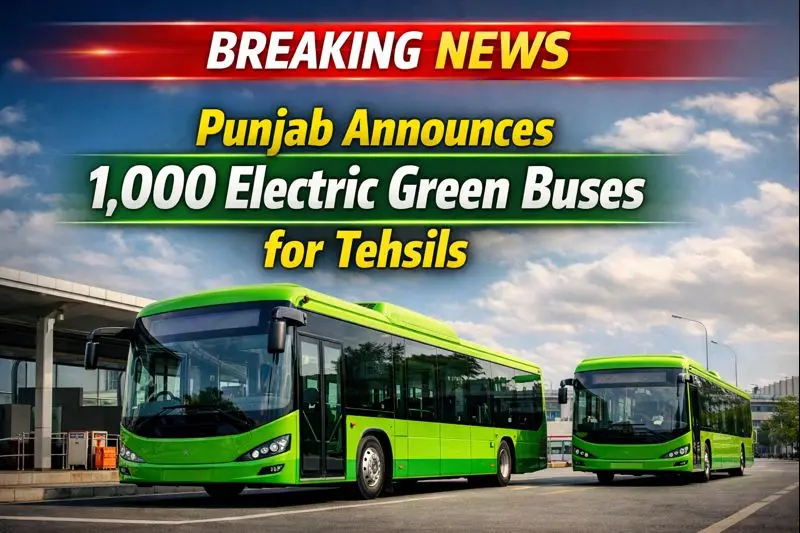
The Punjab government has officially announced the launch of 1,000 electric green buses for different tehsils across the province. This decision is being seen as a major step toward improving public transport and reducing environmental pollution in Punjab.
According to government sources, the electric buses will not be limited to large cities only. Instead, tehsil-level towns and semi-urban areas will also be included. The project aims to provide safe, affordable, and modern transport facilities to millions of daily commuters.
The announcement has been welcomed by the public, especially students, office workers, and low-income groups who rely heavily on public transport.
Why Electric Buses Are Important for Punjab
Punjab has been struggling with serious environmental challenges, including smog, air pollution, and rising fuel consumption. Traditional diesel and petrol buses contribute significantly to harmful emissions.
Electric buses offer several advantages:
- No smoke or exhaust emissions
- Reduced air and noise pollution
- Lower fuel and maintenance costs
- Environment-friendly technology
- Smoother and more comfortable travel
Government officials say that shifting to electric transport is essential for protecting public health and ensuring sustainable development.

Focus on Tehsil-Level Public Transport
One of the most important features of this project is its focus on tehsils. Many tehsils in Punjab currently lack proper public transport systems and depend on outdated wagons or expensive private vehicles.
Problems faced by tehsil commuters include:
- Overcrowded and unsafe transport
- High fares
- Long waiting times
- Poor vehicle condition
By introducing electric buses at the tehsil level, the government wants to ensure equal transport facilities across the province, not just in major cities.

Expected Routes and Service Areas
While final route details have not yet been announced, transport department officials have shared some initial plans.
The electric buses are expected to operate on:
- Routes with high daily passenger demand
- Roads connecting hospitals, courts, colleges, and markets
- Tehsil headquarters and nearby urban centers
- Short and medium-distance routes
Authorities are currently conducting route surveys to ensure maximum benefit for the public.

Affordable Fare Policy for the Public
Affordability is a key part of the electric bus project. Officials have indicated that fares will be lower than conventional buses to encourage people to shift from private vehicles to public transport.
Reasons why fares are expected to remain low:
- Electricity is cheaper than fuel
- Electric buses require less maintenance
- Government support and subsidies
- Efficient energy consumption
Lower fares will especially benefit students, laborers, and daily wage earners.

Charging Infrastructure and Technical Planning
To support 1,000 electric buses, Punjab will also develop a strong charging infrastructure across the province.
Key steps include:
- Installation of charging stations at bus depots
- Use of fast-charging systems
- Training of technical staff
- Planning for uninterrupted power supply
The government says all technical planning will be completed before full-scale operations begin.
Environmental Benefits and Smog Reduction
Environmental experts believe that electric buses can play a major role in controlling air pollution and smog in Punjab.
Positive environmental impacts include:
- Reduction in carbon emissions
- Improved air quality in crowded areas
- Lower noise pollution
- Health benefits for citizens
Punjab often faces severe smog during winter, leading to health problems and school closures. Clean transport projects are considered a long-term solution to this issue.
Job Creation and Economic Impact
Apart from improving transport, the electric bus project is expected to create new employment opportunities.
Potential benefits include:
- Jobs for drivers and conductors
- Technical and maintenance jobs
- Training programs in electric vehicle technology
- Reduced fuel import costs
Officials believe such projects can support economic stability and modern skill development in Punjab.
Challenges and Implementation Issues
Experts have also highlighted some challenges that need careful planning:
- Battery maintenance and replacement
- Power load management
- Driver and staff training
- Timely completion of infrastructure
However, the government has assured that the project will be implemented in phases to address these issues effectively.
Public Reaction to the Announcement
The announcement has received a largely positive response on social media. Citizens have appreciated the focus on tehsils but have also raised some concerns.
Public demands include:
- Transparent route allocation
- Fair distribution among tehsils
- Clear fare details
- Timely launch of services
Many people believe that if implemented properly, this project can change daily commuting in Punjab.
Future Expansion Plans
Government officials have hinted that the 1,000 electric buses are only the beginning. If the project performs well, more buses may be added in the future.
Possible future plans include:
- Expansion to rural routes
- Integration with existing transport systems
- Use of renewable energy for charging
- Introduction of smart ticketing
This shows a long-term commitment to modern and sustainable transport.
Conclusion – Punjab Announces 1,000 Electric Green Buses for Tehsils
The announcement of 1,000 electric green buses for Punjab tehsils is a major development in the province’s public transport system. It reflects a shift toward clean energy, public convenience, and balanced regional development.
If implemented effectively, this project can improve mobility, reduce pollution, and enhance the quality of life for millions of people. Citizens are now waiting for official launch dates, route details, and fare announcements.
Punjab’s electric bus initiative represents a step toward a cleaner, smarter, and more accessible future.
Punjab government announces 1,000 electric green buses for tehsils to provide affordable transport and reduce pollution across the province.